

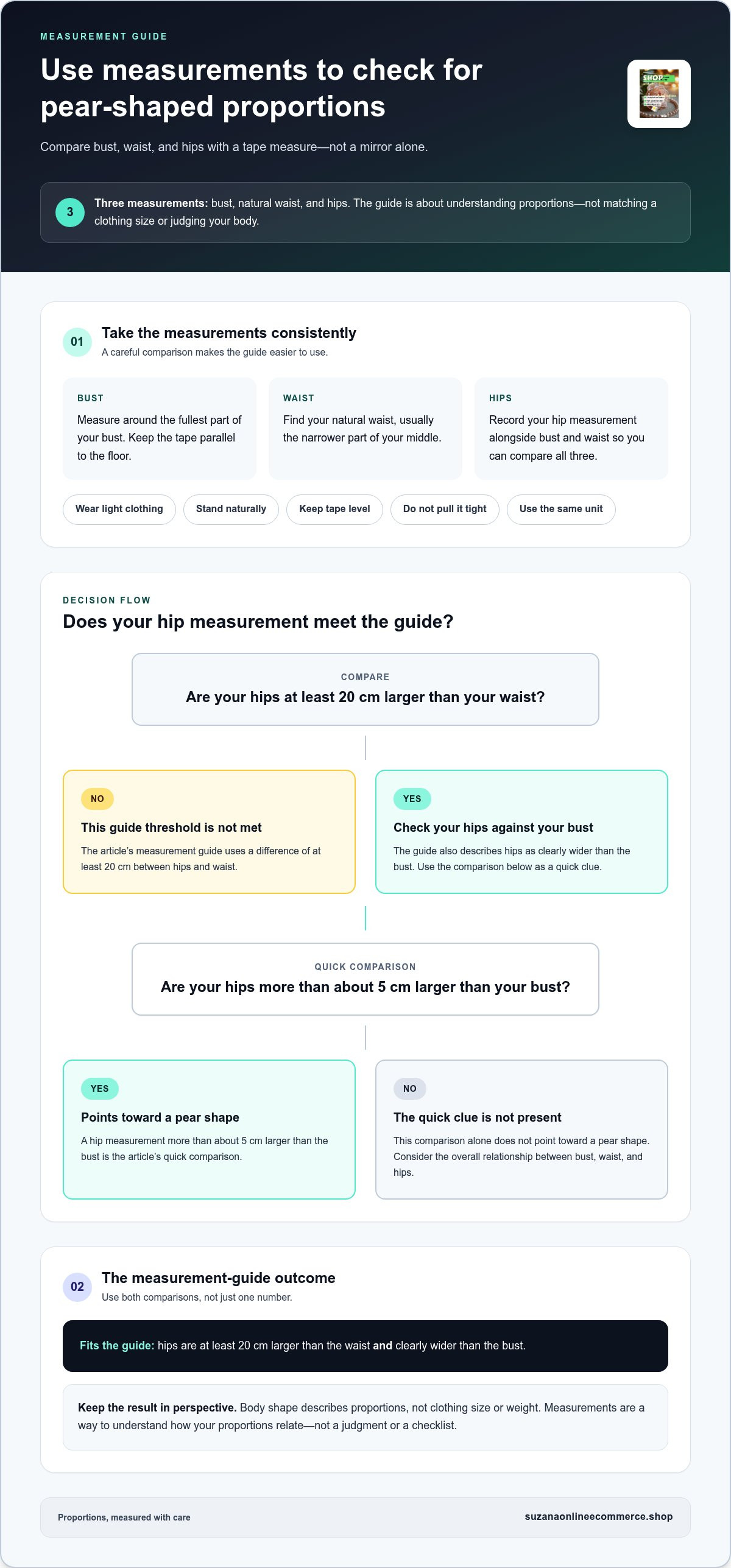
A tape measure can make the pear shape easier to identify than a mirror alone. Hips at least 20 cm larger than the waist, and clearly wider than the bust, fit the measurement guide for a pear-shaped body. For a quick comparison, hips more than about 5 cm larger than the bust point toward a pear shape.
Knowing your proportions can make getting dressed feel simpler, especially when you want clothes that balance your silhouette without hiding your shape. The best clothes for a pear-shaped body often define the waist and bring attention to the upper body. This guide covers how to take your measurements, then explores flattering tops, necklines, sleeves, colors, patterns and lengths, with practical ideas for creating proportions that feel right for you.
Key Takeaways
- Use your bust, waist, and hip measurements together to identify your proportions more clearly than relying on appearance alone.
- For a petite frame, try waist-defining tops and A-line shapes to create a balanced, elongated look.
- Choose necklines, sleeves, colors, and patterns that bring attention to your upper body while keeping the outfit harmonious.
- Recognize common pear-shape features, then use fit and length to highlight the proportions you feel best in.
1. What is a Pear Body Shape?
A pear-shaped body typically has hips wider than the bust, a defined waist, and a narrower upper body. Dressing for this silhouette is about balance, not concealment. Waist-defining dresses and tops with details around the shoulders can draw the eye upward, while clean lines below create a harmonious outfit. For a petite frame, pair a defined upper half with an A-line shape.
For a petite frame, start with a fitted or nipped-in top that defines the waist. Add an A-line skirt or dress that skims the hips without adding bulk. This combination can create the impression of a higher, elongated waist. Keep patterns and decorative details on top, with simpler designs around the hips and thighs. A structured shoulder or neat sleeve can also balance the silhouette.
A-line and fit-and-flare dresses suit pear proportions because fitted bodices highlight the waist and skirts skim the lower body. Empire-waist styles can also work: the raised seam sits below the bust, and the fabric falls loosely over the waist and hips. Choose a knee-length, midi, or maxi style. Avoid hems that stop at the widest part of your hips or thighs. With a midi dress, a hem that skims the calf can create a smoother line than one ending at the calf’s widest point.
For pants and jeans, try mid- or high-waisted cuts rather than low rises. Straight, bootcut, trouser-cut, and flare styles can balance the hips; relaxed fits that fall straight from the widest point are another option. Dark denim and clean stitching keep the lower half visually simple.
For jackets, choose a cropped shape or a length that reaches mid-thigh, rather than a hem ending directly at the hips. Coats that fall from just below the hips to mid-thigh add coverage without creating a strong horizontal line across the widest area. These lengths work well over A-line dresses, straight-leg jeans, and fitted tops.
2. Tops, necklines, shoulders, sleeves, colors, patterns, and lengths
Start with a top that defines your waist instead of hiding it. Fitted and gently nipped-in cuts show your shape, while a boxy top can make the outfit look wider. For everyday wear, try a tucked-in T-shirt or a shaped blouse with straight-leg pants. A little stretch can help a top follow your waist comfortably without pulling across the bust.
Necklines that spread across the collarbone can visually balance wider hips. Try square, bateau, or Sabrina necklines to draw attention toward your shoulders and face. A V-neck or scoop neck also creates an upward line, especially with a pendant necklace. To emphasize the shoulders, choose a defined collar, gathered sleeve cap, or subtle shoulder structure rather than adding bulk throughout the outfit.
Sleeves offer another way to draw attention upward. Puff sleeves, flutter sleeves, and gentle gathers add shape around the shoulders, while three-quarter sleeves leave the wrists visible. Pair a fuller sleeve with a clean, fitted waist to keep the outfit balanced. For example, a gathered-sleeve blouse with simple pants creates contrast without crowding the silhouette.
Try brighter colors, bold prints, or embellishments on top, with darker, solid shades below. A floral blouse with plain navy pants draws the eye upward; a busy print across the hips can make that area more prominent. Keep patterns in proportion to your frame, and choose clear color blocks rather than several competing prints.
For work, combine a structured blouse, an open neckline, and tailored pants; for casual wear, try a printed top with a simple skirt or jeans. Avoid shapeless square cuts, heavy hip-level details, and tops that end at the widest part of your hips. Brands with inclusive sizing and varied cuts are useful starting points; compare each size chart and garment measurements, since sizing differs between labels. Explore dresses with defined waistlines to bring these proportions into an easy one-piece outfit.
3. Pear body shape characteristics
A pear-shaped figure typically has hips that appear wider than the shoulders or bust, with a defined-looking waist. This affects how clothes fit: a fitted shirt may follow the upper body, while a skirt needs more room through the hips. Body shape describes proportions, not clothing size or weight. Some people have gently curved hips; others have a more noticeable contrast between their shoulders and lower body.
Look at the outline of an outfit from shoulder to hem. A simple crew-neck top, for example, may sit neatly at the shoulders, while straight-cut pants follow a fuller hip line. That contrast can help you identify your proportions more clearly than focusing on one area. Bust size, shoulder width, and height vary, so people with similar pear-shaped proportions can still wear different styles.
Fit can vary from one garment to another. A jacket that fits across the shoulders may feel snug at the hips, while a skirt that fits the hips may need a different waist fit. This reflects how garment patterns accommodate different proportions. Pay attention to where seams, waistbands, and hems sit on your body instead of relying on a label alone.
Use these details as styling clues, not restrictions. A fitted knit, tucked-in shirt, or dress shaped through the middle can highlight a defined waist. A skirt that falls smoothly keeps the outline simple, while a long, open jacket creates a vertical line over a top and pants. Compare combinations in a full-length mirror and notice which balance feels natural to you.
Body shape describes proportions, not a checklist. Your shoulders may be nearly as broad as your hips, or your waist may be less defined. Clothes that fit comfortably at the shoulders, waist, and hips will show your individual silhouette better than any label.
4. How to identify a pear body shape using measurements
A tape measure can help you compare your bust, waist, and hips instead of relying only on a mirror. Wear light clothing, stand naturally, and keep the tape level without pulling it tight. Record each measurement in the same unit. The aim is to understand how your proportions relate, not to match a clothing size or judge your body.
Measure around the fullest part of your bust, keeping the tape parallel to the floor. Find your natural waist, usually the narrower area between your ribs and hips, and measure without holding your stomach in. For your hips, wrap the tape around the fullest part of your seat and upper thighs. The fullest part of the hips is generally 18 to 22 cm below the waist.
Compare your hip measurement with your waist. A pear-shape measurement guide describes hips at least 20 cm larger than the waist, with hips also clearly larger than the bust. This waist-to-hip difference can indicate a defined waist alongside more volume through the lower body. Use the result as a proportion clue, not a strict label.
Next, compare bust and hip measurements. If they’re within about 5 cm of one another, the proportions may be closer to an hourglass shape. If the hips are more than about 5 cm larger than the bust, that comparison points toward a pear shape. Shoulders, posture, and how measurements are taken can affect the visual impression, so use the tape consistently and compare the actual numbers.
For a clearer takeaway, write the measurements side by side and note which area is widest. Then consider how clothes sit: does a jacket fit your shoulders but pull across the thighs, or does a fitted waist stand out? That combination of measurements and fit can guide choices that balance your silhouette visually. Ready to put your proportions into practice? Explore styles for your wardrobe.
MO. DA FASHION: Dresses
MO. DA FASHION offers dresses for trying pear-shape styling ideas. Look for a waist-defining cut and a skirt that falls smoothly over the hips, then choose a length that suits your proportions. Tops, T-shirts, shirts, and pants are also available for building outfits with separates.
As you browse MO. DA FASHION, use the fit tips in this guide: consider where the waist sits, how the fabric falls, and whether the hem crosses the widest part of your hips or thighs. These details can help you choose pieces that feel comfortable and suit your personal style.
Browse MO. DA FASHION dresses and visit suzanaonlineecommerce.shop to explore the range.
Make Your Next Outfit Feel Like You
Treat your next outfit as a small experiment, not a set of rules. Start with a piece you already enjoy wearing, then build a look around how you want to feel that day: polished, relaxed, or ready for a busy schedule. The best clothes for a pear-shaped body are ultimately the ones that suit your taste and feel comfortable throughout the day.
Notice what you reach for repeatedly and what stays untouched. This simple habit can help you make thoughtful wardrobe choices instead of chasing every new trend. You can also save outfit ideas that feel true to your style and revisit them when you want a fresh combination.
Ready for a little browsing inspiration? Explore MO. DA FASHION and find pieces to make your next outfit your own.
Frequently Asked Questions
What is a Pear Body Shape?
A pear-shaped body has proportions where the hips are fuller than the upper body, often with a noticeable waist. It is not defined by clothing size or weight. For a practical wardrobe check, compare how tops and bottoms fit: a top may feel comfortable at the shoulders while pants need more room through the seat. Use that pattern to guide outfit choices, not to define your style.
What tops balance wider hips and narrower shoulders?
Tops with details near the collar or shoulders add visual interest above the waist. Try a collared shirt worn open over a simple tee, or a top with gathered sleeves and a clean neckline. For a relaxed outfit, leave the shirt untucked if its hem does not cut across the widest part of your hips. Choose a top that lets you move comfortably without pulling at the shoulders or bust.
What skirts and dresses suit a pear-shaped figure?
A-line skirts and dresses are useful starting points because their shape allows room through the hips. Pair a plain A-line skirt with a textured top, or choose a dress with a contrasting bodice and skirt. Check the hem while standing and sitting; a skirt that shifts or rides up may feel less comfortable throughout the day. Choose a length that suits your plans and personal taste.
How should clothes fit a pear-shaped body?
Clothes should sit smoothly at the shoulders and waist, with enough room through the hips for easy movement. Try sitting, walking, and reaching in a garment before deciding whether it fits well. Watch for pulling seams, strained buttons, or a shifting waistband. If one area fits but another feels restrictive, compare a different cut or size instead of relying on the label alone.
What fabrics, patterns, and colors create a balanced silhouette?
Choose fabrics that drape rather than cling, such as chiffon, crepe, or lightweight knits. A small-scale print can feel subtle, while a larger or brighter print creates a stronger focal point. Try placing texture or color near the face, then keep the rest of the outfit simple. For example, pair a printed blouse with a smooth, solid skirt. Let comfort and the overall effect guide your choice.


