

A fabric that feels light isn’t always the coolest choice. Rayon has moderate breathability and dries quickly, so it can work for breathable fabrics for summer clothing, but it doesn’t wick moisture as well as polyester or nylon. Weave and weight matter, too: lighter, more open fabrics generally allow better airflow than thick, tightly woven ones.
That’s useful to know when choosing clothes for warm days. This guide explains how rayon feels in summer, why fabric weight can affect comfort, and what to consider about linen’s breathability, care, and environmental impact. You’ll also find practical ways to assess fabric structure and fit, making it easier to choose summer clothes that feel comfortable and suit your routine.
Key Takeaways
- Compare fabric weight and weave, since lightweight, open cotton styles such as muslin, seersucker, and batiste can feel airier than dense fabrics.
- Consider how synthetic fabrics may feel in hot weather, and weigh environmental impact alongside comfort when choosing materials.
- Linen offers an airy, quick-drying feel, but its tendency to wrinkle and its care needs may affect whether it suits your routine.
- Use fabric structure, garment fit, and care instructions to narrow down summer clothing that feels comfortable for the way you spend the day.
Does fabric weight impact breathability?
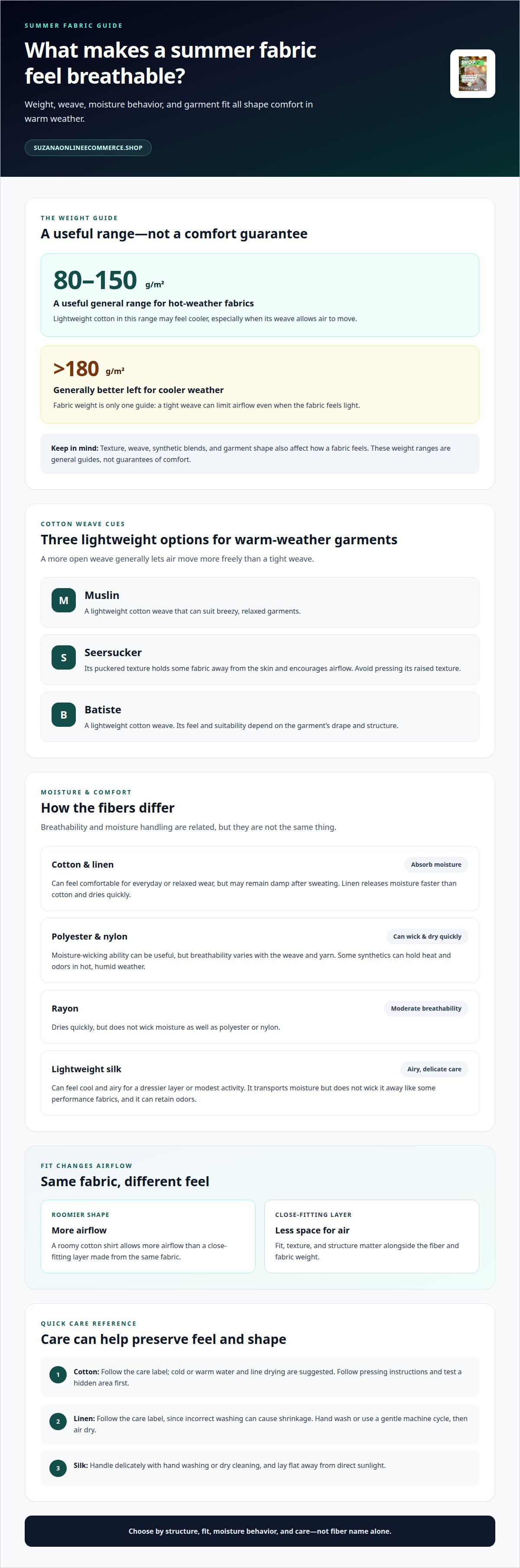
Yes. Fabric weight and weave both affect airflow, so a lightweight cotton garment can feel cooler than a dense one. For hot weather, a useful general range is 80 to 150 g/m².
Weave and Weight in Cotton Breathability
Cotton breathability depends on how closely its threads sit together and how much the fabric weighs. A loose weave lets air move more freely than tightly woven poplin, while thicker cotton can feel warmer against the skin. Weight is a helpful guide, but not the only one: texture, weave, and garment shape also influence comfort. For example, a roomy cotton shirt allows more airflow than a close-fitting layer made from the same fabric.
Lightweight Cotton Weave Options
Muslin, seersucker, and batiste are lightweight cotton weaves suited to warm-weather garments. Muslin and batiste feel light, while seersucker’s puckered texture holds some fabric away from the skin and encourages airflow. These qualities can make a breezy blouse or relaxed dress feel more comfortable. Match the fabric’s drape and structure to the garment’s purpose: a soft, flowing weave suits loose layers, while firmer cotton can hold a more defined shape.
For summer pieces, consider fabrics in the 80 to 150 g/m² range; fabrics heavier than 180 g/m² are better left for cooler weather. These are general guides rather than guarantees of comfort. A tight weave can limit airflow even when the cotton feels light, and a looser weave may feel breezier. Synthetic fabrics in a blend can also change how cotton feels, so consider the whole fabric rather than cotton content alone.
Care helps cotton garments retain their softness and shape. Follow the care label, wash cotton in cold or warm water, and line dry it. For pressing, follow the garment’s instructions and test a hidden area first; avoid pressing raised textures such as seersucker. For linen, use a gentle machine cycle or hand wash, then air dry. Handle silk with hand washing or dry cleaning, and lay it flat away from direct sunlight. For organic fabrics, follow the label and use an eco-friendly detergent without harsh chemicals.
Which Breathable Fabric Is More Environmentally Friendly?
Natural fibers such as cotton, linen, and silk can feel airy, while some synthetic fabrics hold heat and odors in hot weather. But a natural or synthetic label alone doesn’t determine environmental impact: growing and processing plant fibers also affect the environment.
Natural and Synthetic Summer Fabrics
Natural and synthetic fabrics offer different comfort qualities, so the choice matters in warm weather. Cotton and linen absorb moisture, which can feel comfortable during everyday wear but may leave fabric damp after sweating. Polyester and nylon can wick moisture and dry quickly, though their breathability varies with the weave and yarn. Some synthetics, including polyester, acrylic, and nylon, can trap heat and odors, making them less comfortable in hot, humid weather.
Silk for Warm-Weather Clothing
Lightweight silk is an option for warm-weather clothing because it breathes and can feel cool and airy against the body. It transports moisture, but doesn’t wick it away like some performance fabrics, and it can retain odors. Care is another trade-off: silk is delicate and typically needs hand washing or dry cleaning. Choose it for a light, dressier layer rather than clothing intended for heavy sweating.
For hot, humid days, consider fabric structure as well as fiber type. Heavy denim can feel too thick, while polyester, acrylic, and nylon may hold heat close to the skin. Lightweight cotton and linen can feel airy, though cotton absorbs moisture rather than wicking it away or drying quickly. The best choice depends on how much you expect to sweat and how long you’ll wear the garment.
Environmental impact involves more than a natural-versus-synthetic label. Growing crops and processing plant-based fibers aren’t always environmentally benign, so cotton or linen isn’t automatically a lower-impact choice. Blends add another consideration: a garment may combine fibers with different comfort and care needs. Read the composition and care label together, then consider whether the fabric suits the weather and how you’ll use it.
For a light, breathable feel, focus on loose-fitting garments and open fabric structures. Silk can suit a warm day with modest activity, while a cotton or linen piece may feel comfortable for relaxed wear. Explore summer outfit ideas as you consider which fabrics fit your plans.
Linen's breathability and care considerations
Linen is made from flax, and its open texture supports airflow and a naturally cool feel. Its tendency to wrinkle and its care needs are worth considering when choosing everyday summer clothes.
Linen Cooling and Quick-Drying Properties
Linen feels cool and dries quickly, making it a practical option for hot-weather shirts and dresses. Its open structure helps air circulate, and it releases moisture faster than cotton. This can make linen comfortable on warm days, especially in a relaxed fit. For active plans, remember that linen absorbs moisture rather than wicking it away from the skin.
Linen Breathability and Wrinkles
Linen’s airy feel comes with a relaxed, easily wrinkled look. It can also feel stiffer than cotton, so its texture may suit a loose shirt better than a close-fitting layer. Seersucker offers another textured summer option, with raised areas that sit away from the skin. Consider how much structure you want and whether natural creases suit the garment’s style.
Linen and Ramie for Hot Weather
Linen and ramie are both names you may see when comparing warm-weather fabrics. For linen, look for a light feel and an open weave if airflow is a priority. With ramie, consider the garment’s weight, weave, and care label rather than relying on the fiber name alone. A breathable fabric still needs a shape and texture that feel comfortable for your plans.
Care helps linen garments retain their feel. Follow the care label, since linen can shrink if washed incorrectly. Hand wash it or use a gentle machine cycle, then air dry. Don’t treat every linen item alike: a structured shirt and a flowing dress may have different care instructions. After drying, smooth the fabric by hand or press it according to the label. Embrace some wrinkles if a relaxed finish suits the outfit.
Choosing breathable summer clothing
Start with the day’s weather and activity, then consider fabric, fit, and care together. For breathable fabrics for summer clothing, an open weave and room around the body can help air circulate. A loose shirt may feel more comfortable during a relaxed afternoon, while a close-fitting layer can feel warmer. For active plans, moisture movement and drying speed matter, too.
Look beyond the fiber name. Hold the fabric up to the light; more light passing through can suggest a more open structure. This is a quick visual check, not a scientific test. You can also gently crumple the fabric in your fist for 10 seconds to see how it creases and recovers. Compare the texture and drape of different fabrics, such as cotton gauze and a smooth blend.
Consider how each fiber handles moisture. Cotton absorbs it, so a cotton T-shirt can feel damp after exercise. Polyester can wick moisture and dry quickly, but may retain odors. Rayon has moderate breathability and dries quickly, though it doesn’t wick moisture as well as polyester or nylon. Blends and finishes can change these typical qualities, so check the garment’s overall composition and care instructions.
Build a summer wardrobe around how you dress each day. A relaxed cotton shirt may suit an easy outing, while a lightweight synthetic designed for breathability may work better for activity. Light-colored, loose-fitting clothes can help reduce heat and allow airflow. Choosing breathable fabrics for summer clothing means weighing these details together rather than relying on a single fabric name.
Ready to find pieces that fit your plans? Explore summer clothing styles and choose a comfortable starting point for your wardrobe.
MO. DA FASHION
MO. DA FASHION offers summer clothing to explore after you’ve considered fabric, fit, and care. Browse dresses, shirts, T-shirts, and pants with your warm-weather needs in mind. Review each garment’s fabric information and care instructions, then match its feel and shape to your plans, whether you want a relaxed everyday outfit or a polished look. Breathability depends on the fabric itself, not simply the clothing category, so use the guidance above to narrow your options. Explore MO. DA FASHION’s collection to find pieces for your summer wardrobe.
Make Comfort Part of Your Summer Plans
Let your daily routine guide your next wardrobe choice. A relaxed day outdoors, a busy commute, and an evening gathering can each call for a different balance of airflow, coverage, and easy care. Choosing breathable fabrics for summer clothing is less about following one rule and more about finding pieces that feel right for how you spend your time.
As you browse, think about the outfit as a whole: how the garment sits, what you’ll wear it for, and whether its care suits your routine. Explore MO. DA FASHION’s dresses, tops, and T-shirts as you shape a summer wardrobe around your preferences.
Ready to take the next step? Contact MO. DA FASHION about your clothing, and find pieces that make getting dressed for warm days feel easy.
Frequently Asked Questions
Is rayon breathable?
Yes, rayon is moderately breathable and can feel light and fluid in warm weather. It’s made from natural materials such as wood pulp, then processed into a semi-synthetic fiber. For a summer outfit, rayon can suit a loose blouse or flowing dress. Its moisture handling differs from that of performance synthetics, so it may feel less comfortable during activities that cause heavy sweating.
Why is breathability important in summer fabrics?
Breathability lets air move through fabric, which can make clothing feel less stuffy against the skin on a warm day. It also affects how comfortable a garment feels during different activities. For a relaxed afternoon, an airy, loose-fitting shirt may feel pleasant. For a brisk walk, moisture movement and drying speed can matter alongside airflow.
How does linen compare to cotton for summer wear?
Linen is generally more breathable and quicker to dry than cotton, making it appealing for especially warm days. Cotton is soft, absorbs moisture, and is easy to wash and care for. For example, a linen shirt may suit a hot outdoor event, while a cotton T-shirt can be an easy everyday choice. Fabric construction and fit still affect comfort.
Is cotton good for hot weather?
Yes, cotton can be a comfortable warm-weather choice because it’s soft, breathable, and absorbent. The weave matters: loose cotton gauze or jersey often allows more airflow than tightly woven poplin. Cotton absorbs sweat rather than moving it away quickly, so it may feel damp after exercise. A lighter, relaxed cotton garment can work well for less active days.
Is nylon breathable?
Nylon’s breathability varies with its yarn size and how it’s knitted or woven. It can wick moisture and dry quickly, but nylon is also moisture-resistant and may feel less airy than an open natural-fiber fabric. For a warm day, consider the garment’s structure and intended activity. A close, dense nylon layer may feel different from a lightweight, more open construction.
Is polyester breathable?
Polyester can wick moisture and dry quickly, but airflow depends on the fabric’s construction. Some polyester garments may trap heat or hold odors, so the fiber name alone doesn’t predict comfort. For activity, a lightweight polyester fabric designed for breathability may be more suitable than a dense weave. For relaxed wear, compare its fit and texture with the day’s conditions.


