
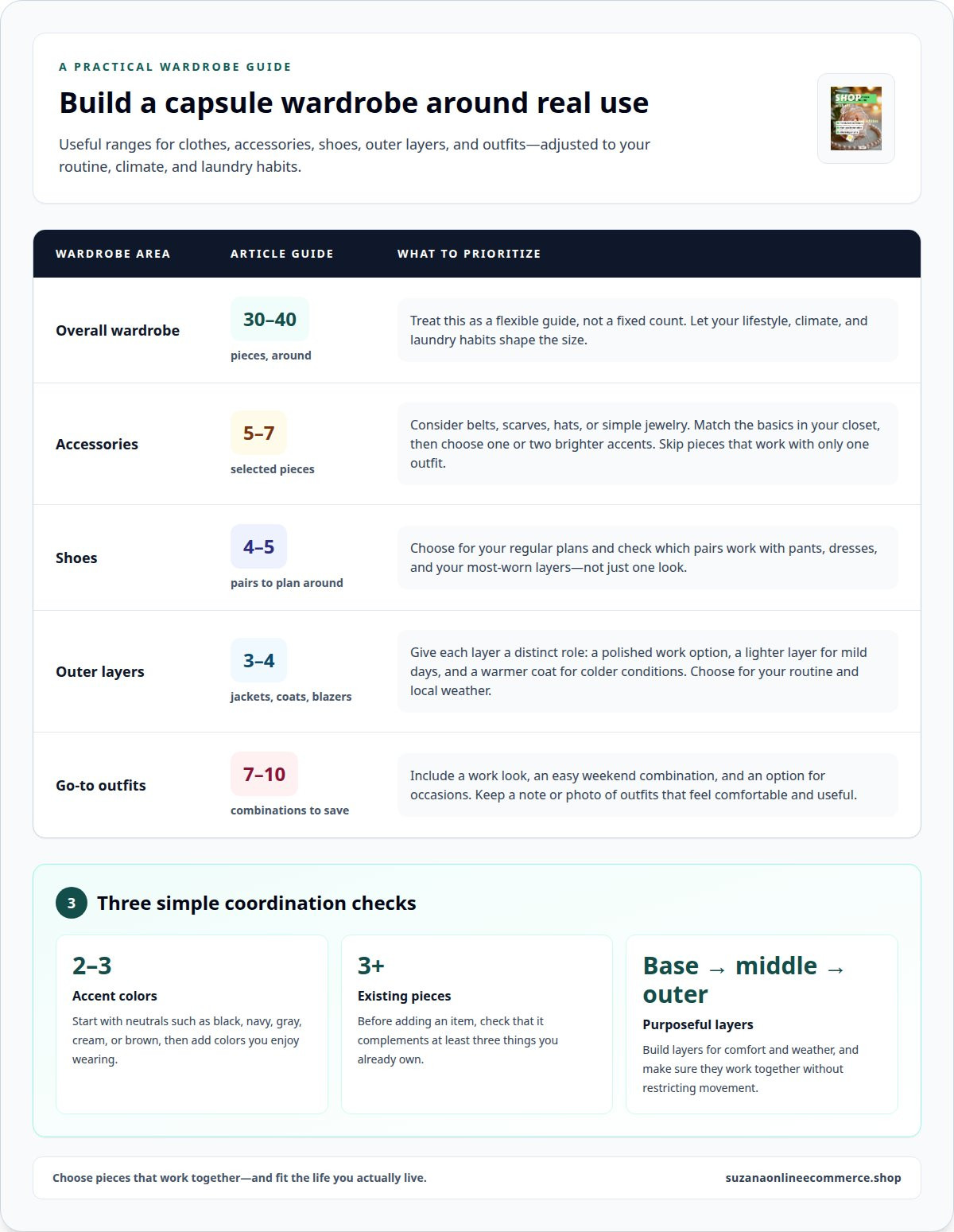
A practical capsule wardrobe doesn't start with a shopping list; it starts with clothes that work together. It’s a small, considered selection of versatile pieces you can mix and match. Learning how to build a capsule wardrobe in 2026 means choosing a size that suits your routine, not following a fixed count. Many capsule wardrobes include around 30-40 pieces, with the right number shaped by your lifestyle, climate, and laundry habits.
That balance is the appeal: fewer disconnected choices and more outfits that feel like you. Start with clothes you already wear, then choose a palette and add pieces that work in several outfits.
This guide walks you through the process, from editing your closet and choosing versatile basics to combining neutral shades with accent colors, textures, and personal details. You’ll also find practical ways to choose jackets, dresses, and other outfit-making pieces, so your capsule feels easy to wear and genuinely yours.
Key Takeaways
- Start with a closet edit and notice which pieces fit your everyday routine before planning additions.
- Choose a neutral base, then add two or three accent colors to bring personality to your outfits.
- Before adding a new piece, see whether it works with at least three items you already own.
- Use accessories and varied textures to refresh simple outfits while keeping the wardrobe cohesive.
Choosing neutral colors and statement pieces
- Assess fabric and durability before choosing a piece. For a more sustainable wardrobe, prioritize clothes you expect to wear often, then read the fiber and care labels and inspect seams, hems, and closures for secure finishing.
- Choose a neutral base that suits your everyday clothes, such as black, navy, gray, cream, or brown. Then add two or three accent colors you enjoy wearing. A consistent palette helps a fitted top, pants, and jacket work together without every piece matching exactly.
- Start with a closet edit. Set aside the clothes you wear regularly, including a favorite shirt or dress, and note their colors and fabric feel. Use those pieces as a guide, then add new items only when they complement at least three things you already own.
- Build around versatile key pieces, such as solid tops, a simple dress, and pants that suit your routine. Choose tops that pair with multiple bottoms. For layering, look for a jacket that fits comfortably over your usual shirts without restricting movement.
- Balance affordable basics with investment pieces by considering how often each item will be worn. Spend more thought on a jacket or pants that anchor many outfits; keep occasional statement pieces selective. Check care needs, fit, and fabric before deciding, not just the display price.
- Make the statement piece the outfit’s focal point. A patterned shirt, colorful dress, or distinctive jacket can lift neutral basics, while simpler pieces keep it wearable. For a practical 2026 wardrobe, favor clean silhouettes and solid basics over trend-led items that don’t suit your usual outfits.
Choose accent colors deliberately, and use versatile tops to connect multiple bottoms. Each new piece should complement three items you already own, helping your capsule wardrobe stay coordinated.
Adding personal style through accessories and texture
Choose finishing touches that suit your routine, then repeat a few details across outfits. A focused edit keeps accessories from crowding the clothes you wear most.
Choose Accessories and Finishing Touches
Start by selecting five to seven accessories, such as belts, scarves, hats, or simple jewelry. Match their colors to your closet basics, then choose one or two pieces for a brighter note. Avoid accessories that work with only one outfit.
- Lay out a blazer, a trench, and your everyday tops. Try each belt, scarf, or necklace with at least two combinations, and keep the pieces that finish more than one look.
- Set aside seasonal details, such as a light scarf for spring. Before shopping, review what you already own and fill a real gap instead of duplicating a similar accessory.
Style Shoes, Bags, and Textures
Use texture to add contrast without introducing another color. Pair smooth basics with a ribbed top, a woven bag, or a softly textured scarf. Choose shoes and bags that suit your regular plans, and skip accessories that feel uncomfortable or hard to coordinate.
- Plan around four to five pairs of shoes for different outfits and occasions. Consider which pairs work with pants, dresses, and your most-worn layers, rather than choosing each pair for one look.
- Try a structured bag with relaxed clothes, or a softer bag with a crisp blazer. Repeat one texture in another small detail, such as a woven belt, to make the outfit feel connected.
- Build a spring combination from a simple top, a light layer, and a textured accessory. If a versatile dress fits your routine, style it with a bag and finishing touches you already enjoy wearing.
What is a capsule wardrobe?
A capsule wardrobe is a small selection of versatile clothes that combine into multiple outfits. Build around your real routine, using familiar pieces instead of buying every new trend.
- Start with an outfit such as a shirt, pants, and blazer. Check how the silhouettes work together: a fitted shirt balances wider pants, while a relaxed button-down pairs well with a straighter shape. Make sure the proportions feel comfortable when sitting, walking, and layering.
- Plan for work, casual wear, and special occasions by changing one or two pieces. Wear a shirt and pants with a blazer for work, then swap the blazer for a casual layer. For an event, choose a dress or add a polished shirt and finishing touches.
- Test tops with every suitable bottom to create mix-and-match outfits. A shirt can look relaxed untucked with jeans and sharper tucked into tailored pants. Try combinations before buying; a piece earns space when it works with at least three clothes you own.
- Layer with purpose. Build each outfit from a base, a middle layer, and an outer layer, then add finishing touches. For example, wear a T-shirt under an open shirt and jacket. Adjust the layers for comfort and weather rather than forcing a bulky combination.
- Create seven to ten go-to outfits and save notes or photos. Include a work look, an easy weekend combination, and an option for occasions. This gives you a useful rotation without turning your capsule into a rigid uniform or chasing every seasonal trend.
- Avoid common mistakes by checking fit, comfort, and color coordination together. Try each outfit as a complete look, including button placement and how shirts sit when tucked. Keep pieces easy to see, and review your collection when your routine or the seasons change.
Selecting coats, jackets, dresses, and footwear
Build your seasonal capsule around the climate you experience, not a generic calendar. Across the United States, use layers to adapt to local temperature changes, then rotate pieces as conditions shift.
- Choose outerwear for your routine and the weather you face. A capsule can include three to four outer layers, such as jackets, coats, and blazers. Pick distinct roles: a polished jacket for work, a lighter layer for mild days, and a warmer coat for colder conditions.
- Prioritize classic shapes that work with your regular outfits. A straight blazer can dress up shirts and pants, while a relaxed jacket suits everyday clothes. In Fall 2026, shaped jackets, including funnel-neck, cinched-waist, and belted styles, are seasonal trends. Choose one only if its shape fits your personal style.
- Include two to three dresses suited to your calendar. A simple dress can work for daytime plans with casual layers, then look more polished with a blazer for an occasion. Consider sleeve length, fabric weight, and how easily each dress can move between settings and seasons.
- Plan footwear around the activities your wardrobe needs to support. A capsule may include four to five pairs for different occasions, such as everyday wear and dressier plans. Choose pairs that coordinate with several outfits, and consider comfort and weather before adding another option.
- Adjust the capsule for your local climate. In a warm summer, lighter layers may earn more use; in cooler conditions, prioritize coats and pieces that layer comfortably. Keep seasonal items accessible when needed and store the rest until the weather changes.
For a polished capsule, browse versatile jackets and dresses that can anchor outfits across seasons.
MO. DA FASHION
MO. DA FASHION offers dresses, tops, T-shirts, and pants to help you find pieces for a considered wardrobe. Turn to these clothing categories when your closet edit reveals a genuine gap, such as a top that works across several outfits or pants that suit your everyday plans. Choose additions by color, fit, and how easily they pair with clothes you already wear. A dress can offer a simple one-piece outfit, while a top or T-shirt can bring fresh combinations to familiar pants. Browse with your capsule plan in mind, focusing on pieces that feel like your style and fit your routine. For help with your wardrobe choices, contact MO. DA FASHION.
Make Your Next Wardrobe Choice Count
A capsule wardrobe works best when it keeps pace with your real life. Let your next clothing choice meet a specific need, whether it’s an outfit for busy weekdays or an easy option for relaxed plans. Before adding anything, picture when you’ll wear it and what it can pair with in your closet. That pause helps keep shopping focused on useful, personal pieces.
Use the ideas in this guide as a flexible starting point, not a strict set of rules. Your routine, preferred colors, and local seasons can all shape how to build a capsule wardrobe in 2026. MO. DA FASHION offers dresses, tops, and T-shirts to consider as you refine your everyday combinations. Choose what feels right for your style and the outfits you want to wear next.
Contact MO. DA FASHION for style help, and take your next wardrobe step with confidence.
Frequently Asked Questions
What is a capsule wardrobe and how many pieces should it include in 2026?
A capsule wardrobe is a coordinated selection of clothes that can form multiple outfits. Around 30-40 pieces is a common starting guideline, not a required limit. Some people prefer fewer items, while others need more for work, climate changes, or frequent laundry. Count the pieces you wear regularly, then adjust the total to match your routine rather than aiming for a universal number.
What essential clothing pieces belong in a year-round capsule wardrobe for women and men?
Useful categories include tops, shirts, pants, a jacket, and occasion-ready options such as a dress or suit. The balance can vary by personal style and daily plans, not gender. One possible guide is 8-10 tops and 5-6 bottoms, with lighter or warmer layers chosen for local weather. Start with clothes suited to your regular activities, then add pieces for occasions your everyday rotation doesn’t cover.
How much does it cost to build a capsule wardrobe in 2026, and how to set a budget?
There’s no single cost for building a capsule wardrobe; the total depends on what you already own and which gaps need filling. Set a personal spending limit before shopping, then list missing items by everyday usefulness. Prioritize pieces that meet a real need, and build gradually instead of replacing everything at once. Revisit your list before each purchase to keep spending intentional.
What are the best affordable and durable clothing brands for capsule wardrobe basics in the US?
No single clothing brand is the best fit for every closet, budget, or style. Compare basics by checking fabric information, seams, hems, closures, and care instructions. Consider whether each garment feels comfortable and works with clothes you already wear. A lower-priced item may not be useful if it rarely leaves the closet, so judge value by practical wear and durability, not the label alone.
Is a capsule wardrobe more cost-effective than buying clothes regularly?
It can make spending more deliberate: prioritize pieces you’ll wear often, and add only items that fill a real gap and work with at least three things you own.


