

Build outfits for hot, humid weather with lightweight, breathable pieces, relaxed fits, and light colors. Choosing breathable, lightweight fabrics and pieces that dry quickly can make warm-weather outfits more comfortable. Pair a light-colored top with breathable bottoms, or choose a dress for an easy one-piece look.
Humidity can make getting dressed feel like a balancing act: you want an outfit that looks pulled together without feeling clingy or heavy. Coordinated colors and versatile pieces make that easier, while fabric and fit help keep the look comfortable.
Find practical ways to choose breathable, quick-drying fabrics, use light colors, and put together combinations for warm-weather plans. Simple outfit formulas help you make more of what’s already in your wardrobe and get dressed with less guesswork.
Key Takeaways
- Choose breathable, lightweight fabrics for everyday comfort, and consider quick-drying options when you expect to sweat.
- Use light colors and relaxed fits to create easygoing looks for warm, humid days.
- Build a simple color palette so tops and bottoms are easier to mix and match.
- Try a dress for a one-piece outfit, or coordinate separates for more combinations from your wardrobe.
1. Breathability, moisture-wicking, and quick-dry fabric
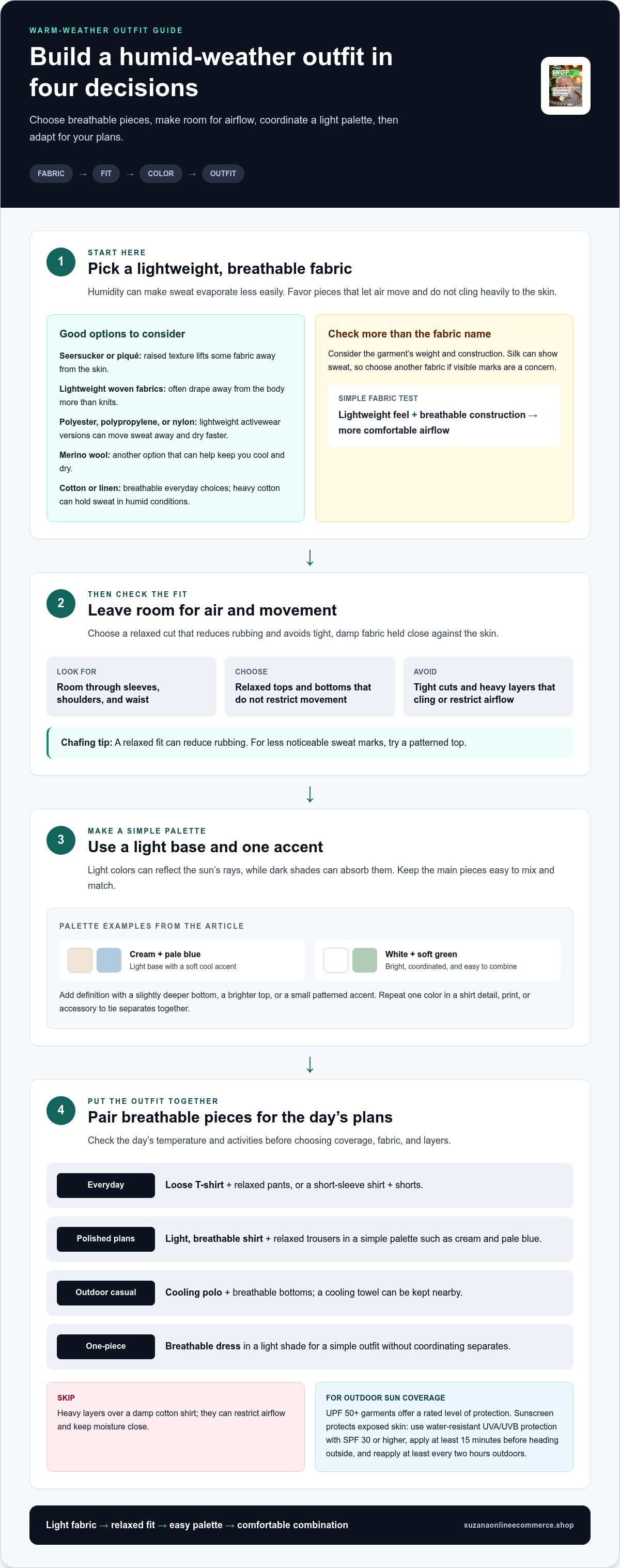
In humid weather, sweat can linger because it evaporates less easily. Damp fabric may feel uncomfortable for longer, especially under layers that restrict airflow. Choose a loose, lightweight shirt that lets air move around your body. An airy woven top, for example, can drape away from your skin instead of clinging. Build outfits for hot humid weather around breathable pieces that leave room for air to circulate.
Fabric texture can also affect how a garment feels. Seersucker and pique have raised textures that lift some of the material slightly off the skin. Lightweight woven fabrics often drape away from the body more than knits, making them useful for relaxed summer outfits. For an easy combination, pair a textured shirt with lightweight pants and skip extra layers unless the weather calls for them.
For moisture-wicking, quick-drying options, look at fabrics commonly used in activewear, such as polyester, polypropylene, and nylon. Lightweight versions can move sweat away from the skin and dry faster. Merino wool is another option that can help keep you cool and dry. Cotton and linen are breathable choices for everyday wear, though heavy cotton can hold sweat in humid conditions. Consider a garment’s weight and construction, not just its fabric name.
To help prevent chafing, choose a relaxed fit that reduces rubbing and avoids tight, damp fabric against the skin. To make sweat marks less noticeable, try a patterned top. Silk can show sweat, so choose another fabric if visible marks are a concern.
Use these simple steps when choosing an outfit: pick a lightweight fabric, check that the cut allows airflow, then coordinate it with another breathable piece. For example, wear a loose linen top with lightweight pants, or choose a quick-drying shirt for an active day. Avoid stacking heavy layers over a damp cotton shirt, since they can restrict airflow and keep moisture close. A dress in a breathable fabric can also make a simple one-piece outfit. These outfits for hot humid weather can look coordinated without relying on heavy layers.
2. Light-colored clothing
Light colors can reflect the sun’s rays, while dark shades can absorb them. Build a simple palette around white, cream, pale blue, or soft green, then add one deeper accent for contrast. A pale shirt with light, breathable bottoms creates a coordinated look without complicated patterns. Choose lightweight pieces with room to move rather than tight clothing that clings in humidity.
For work, keep your outfit polished with a light-colored, breathable shirt and relaxed trousers. A simple palette, such as cream and pale blue, feels coordinated and easy to wear through a warm commute or in a bright office. If your day includes outdoor meetings, choose lightweight clothing that offers coverage without bulky layers.
For golf or other polished outdoor plans, pair a cooling polo with breathable bottoms and keep a cooling towel nearby. A light polo and neutral trousers create a tidy combination, while a soft color accent adds interest. This formula also works for outdoor lunches and casual events when you want a neat look without heavy layers.
Skip tight-fitting pieces and thick layers that cling or restrict airflow. Dark clothing can absorb sunlight, so choose lighter colors for sunny plans. For example, swap a dark, heavy top for a lightweight pale shirt and keep the rest of the outfit relaxed. Patterns can add visual interest while making sweat marks less noticeable.
For extra sun coverage, choose clothing with a UPF rating; UPF 50+ garments offer a rated level of protection. Clothing ratings are tested to provide the stated level, while sunscreen protects exposed skin. For outdoor activity, use water-resistant sunscreen with UVA/UVB protection and SPF 30 or higher, and reapply at least every two hours outdoors. Apply sunscreen at least 15 minutes before heading outside. For an easy one-piece option, browse lightweight summer dresses in light shades.
3. What colors work well in humid-weather outfits?
Build a summer palette with a light base and one accent shade. Since lighter colors reflect sunlight, try cream with pale blue, or white with soft green. Keep your main pieces in shades that mix easily, then use a brighter top or patterned shirt for contrast. This makes outfit choices simpler without relying on a matching set.
Color works best alongside a comfortable fit. Choose lightweight garments with a little stretch for easier movement, and avoid cuts that pull across the shoulders or waist. A loose T-shirt with relaxed pants makes an easy everyday combination; a short-sleeve shirt with shorts feels more casual. For a polished look, coordinate the colors and vary the textures or patterns.
For humid summer days, consider how each piece sits against your body. A lightweight top with room through the sleeves leaves more space between fabric and skin. Pair it with shorts or lightweight pants that don’t feel restrictive when walking or sitting. If you prefer more coverage, choose an airy shirt with sleeves you can roll up. Leave room to move instead of choosing a tight fit that holds damp fabric close.
Color can also help balance an outfit. Pair a pale top with a slightly deeper bottom, such as cream and muted blue, or wear a light base with a small patterned accent. These combinations add definition while keeping the overall look bright. To coordinate separate pieces, repeat one color in a shirt detail, print, or accessory.
For shoes, choose a lightweight pair that feels comfortable and secure for your plans, with breathable construction for warm conditions. Match the color to your outfit’s base shade for a tidy finish, or use a contrasting color as a small accent. A dependable outfit formula is to choose a light palette, select a relaxed top and bottom, then check that each piece allows comfortable movement.
4. Coordinating humid-weather outfits
Start with a small color palette, then choose pieces that work together for different plans. For example, pair a light top with neutral pants, then switch to shorts for a more casual look. Check the day’s temperature and activities before choosing coverage, fabric, and layers. This simple order helps you plan outfits for hot humid weather without making every piece match exactly.
For women, a breathable dress creates a complete look in one choice. For a two-piece option, combine a relaxed top with lightweight pants, or wear a T-shirt with shorts. Keep the colors in the same family, such as cream and pale blue, and add a patterned piece for contrast. A loose shirt can also provide extra coverage for a sunny walk.
For men, try a lightweight shirt with relaxed pants for a polished daytime outfit, or pair a T-shirt with shorts for casual plans. Choose cotton for breathable everyday wear, or consider a lightweight, quick-drying fabric for active plans. Polyester can dry quickly, but it may feel clammy to some people, so balance fabric choice with fit and comfort.
Use a repeatable outfit formula: choose one top, two bottoms, and a shared color palette. A stylist’s client combined two pairs of shorts with tops to create 16 outfits, showing how a few compatible pieces can offer variety. Another client’s wardrobe review found three tops that paired well with one skirt. Use these examples to plan outfits for hot humid weather with pieces you already enjoy wearing.
Finish by checking movement and sun protection. Sit, reach, and walk in the outfit; fabric that pulls or bunches can make a humid day less comfortable. For outdoor plans, consider a lightweight layer that covers your shoulders without adding bulk. Browse tops and pants for summer outfit combinations to find pieces that can mix into your wardrobe.
MO. DA FASHION: Dresses
MO. DA FASHION offers dresses as an easy one-piece starting point for warm-weather outfits. Browse dresses alongside tops, T-shirts, and pants to compare colors and build combinations for your plans. Choose a dress for a coordinated look, or pair a light-colored top with pants for a versatile separate outfit. Focus on the shades and silhouettes you enjoy wearing, then use the outfit ideas above to guide your choices. Explore dresses and outfit options at MO. DA FASHION.
Make your next warm-weather look your own
Let your weekly plans guide your wardrobe choices. Choose pieces you can style in more than one way, making it easier to get dressed for a casual afternoon, a workday, or an outdoor gathering. A consistent color palette helps new pieces fit naturally with what you already wear, while cuts you prefer keep each combination personal.
For a fresh start, explore dresses, tops, and T-shirts from MO. DA FASHION. Pick the piece that best suits your plans, then build around it with colors and separates you enjoy wearing. Thoughtful choices can make outfits for hot humid weather feel more considered and easier to reach for.
Explore MO. DA FASHION’s dresses, tops, and T-shirts, and find a look that feels like you. A little planning can make your next warm-weather outfit a pleasure to put on.
Frequently Asked Questions
How can I build a coordinated wardrobe for humid weather?
Choose a few tops and bottoms that pair easily, then add a dress for days when a single piece feels simpler. Before adding anything, lay out possible combinations and see which colors and shapes work together. A white shirt, pale blue top, and neutral pants can provide several starting points. This simple wardrobe plan helps reduce last-minute outfit decisions.
What colors work well in humid-weather outfits?
Try combinations that feel balanced rather than perfectly matched. Cream with soft green, or pale blue with a muted neutral, makes a calm base; a patterned shirt or brighter top adds contrast. For a daytime gathering, repeat one color in two pieces for a pulled-together effect. Keep the overall palette simple, then vary prints or textures.
What fabrics are best for hot, humid weather?
For everyday plans, lightweight cotton and linen are breathable options. If you expect a lot of movement, consider quick-drying, moisture-wicking fabrics such as polyester, polypropylene, or nylon. A loose linen shirt can suit a relaxed lunch, while a lightweight synthetic top may work better for an active outing. Choose based on the activity, fit, and how quickly you want your clothing to dry.
What clothing styles keep you cool in hot, humid weather?
Choose relaxed silhouettes that leave room for movement, such as a loose shirt with easy-fitting pants or a T-shirt with shorts. A dress can simplify getting ready, while a lightweight, three-quarter-sleeve shirt offers more arm coverage without a heavy layer. For a neat look, keep the cut simple and avoid unnecessary pieces that trap warmth.
What colors are best to wear in hot, humid weather?
Light shades such as white, cream, and pale blue are practical for sunny days because they reflect sunlight. Make them feel personal with one deeper accent, like a muted green top or a small print. For a coordinated outfit, use the accent color in one piece and keep the rest of the look in soft, complementary shades.
What should you wear for outdoor activities in hot, humid weather?
Choose lightweight clothing that allows movement and suits the activity, such as a breathable top with relaxed bottoms. Check the temperature and humidity before exercising, and consider going earlier or later when it’s cooler. A shadier route and slower pace can also help you adapt to the heat. For sunny plans, include suitable sun protection.


