
The best interview outfit is one that fits the workplace and the role. When deciding what to wear to a job interview as a woman, start with the company’s dress code: choose business professional for a formal setting and polished business casual for a more relaxed one. If you’re unsure, aim slightly more polished than everyday office wear.
It’s easy to focus on finding an outfit that looks good, but comfort and appropriateness matter too. Your clothing can show that you understand the setting and help you focus on the conversation.
Here’s how to choose between business casual and professional styles, put together a traditional interview outfit, and adapt your look to the company’s dress code. From a blazer and dress pants to a simple dress, the right pieces can help you feel prepared without making your outfit the main event.
Key Takeaways
- Match the outfit’s formality to the role and workplace, and choose a polished look if the dress code feels unclear.
- For a video interview, dress professionally from head to toe and choose colors that look clear on screen.
- Build a traditional professional outfit around a classic suit or a simple dress, with neat, understated finishing touches.
- Use clues from the company’s work setting to guide your outfit, especially if the interview may include a tour of a practical workspace.
1. Choosing between business casual and business professional
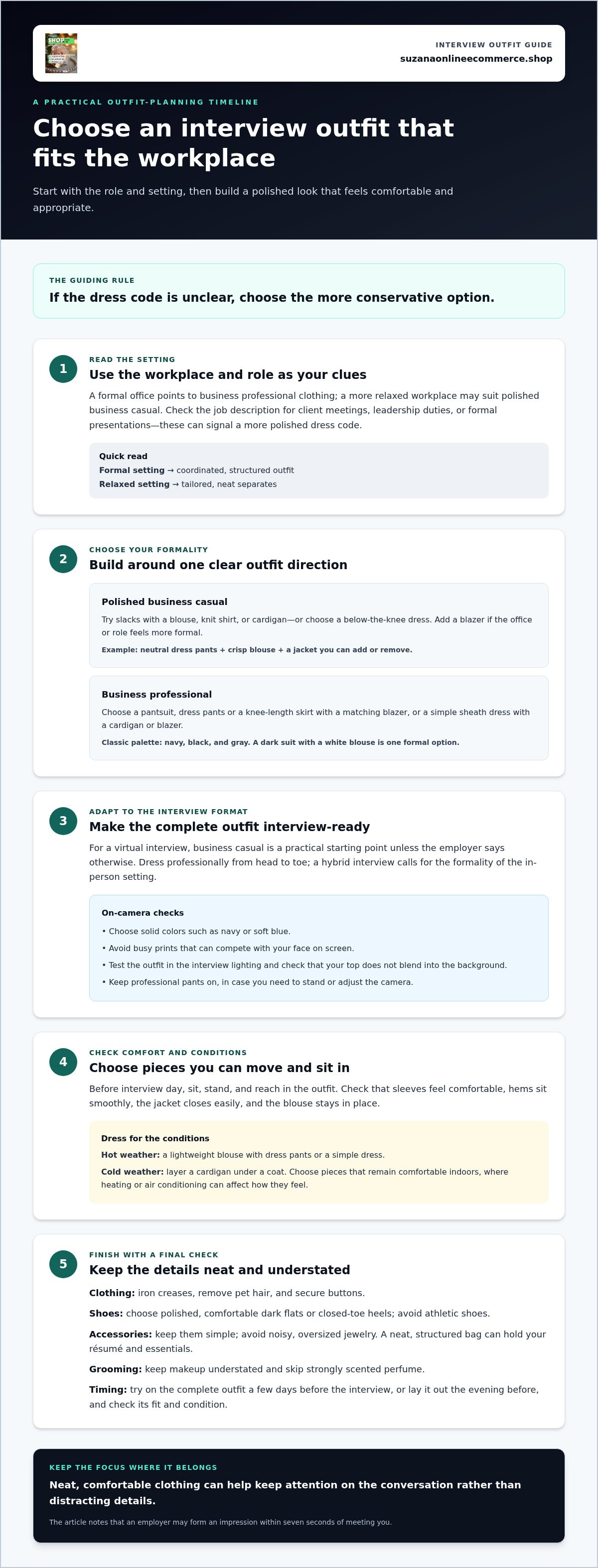
Choosing what to wear to a job interview as a woman starts with the workplace and role. In 2026, formal offices call for business professional clothing, while relaxed workplaces may suit polished business casual. If the dress code feels unclear, choose the more conservative option.
For a business casual interview, try slacks with a blouse, knit shirt, or cardigan. A below-the-knee dress is another practical choice. Add a blazer if the role or office feels more formal. For example, pair neutral dress pants with a crisp blouse and bring a jacket you can put on or take off. Keep the outfit neat, even in a relaxed office.
Business professional calls for a coordinated, structured look. Choose a pantsuit, or pair dress pants or a knee-length skirt with a matching blazer. A simple sheath dress with a cardigan or blazer also works. Neutral shades such as navy, black, and gray keep the outfit classic. For a formal interview, for example, wear a dark suit with a white blouse.
For a business casual office, match your outfit to the role’s responsibilities. A blouse and dress pants can look polished without a full suit, while a blazer adds formality for a client-facing position. For a virtual interview, business casual is often a practical starting point unless the employer says otherwise. Make sure your full outfit is interview-ready, not just the part visible on screen.
In hot weather, try a lightweight blouse with dress pants or a simple dress. In cold weather, layer a cardigan under a coat. Choose pieces that feel comfortable indoors, where heating or air conditioning can affect how your outfit feels.
For affordable interview clothing in the United States, start with versatile pieces you already own. Thrift and consignment shops are also places to look for a simple blouse, pants, or dress. Try on the complete outfit a few days before the interview to check its fit and condition.
2. Why is it Important to Dress Appropriately for an Interview?
Clothing can signal that you understand the setting and have considered the role. An employer may form an impression within seven seconds of meeting you. If you’re deciding what to wear to a job interview as a woman, neat, comfortable clothing can keep attention on the conversation rather than distracting details.
For a video interview, choose colors that look clear on camera. Navy, soft blue, and other solid shades are a simple starting point. Busy prints can compete with your face on screen, while a crisp blouse or blazer creates a defined outline. Test your outfit in the interview lighting, and check that your top doesn’t blend into the background.
Remote and hybrid interviews still call for a complete outfit. Professional pants can help you feel prepared if you need to stand or adjust your camera. For a hybrid meeting, dress for the formality of the in-person setting, even if part of the conversation happens online. Keep a cardigan nearby if the room feels cool, and sit where light reaches your face.
Fit matters on camera and in person. Before interview day, sit, stand, and reach in your outfit. Check that the sleeves feel comfortable and the hems sit smoothly. Iron creases, remove pet hair, and make sure buttons are secure. Groom your hair, keep makeup understated, and skip strongly scented perfume. For video, a lipstick shade one or two shades darker can appear more defined on screen.
Choose polished, comfortable shoes, such as dark flats or closed-toe heels, and keep accessories simple. A neat, structured bag can hold your résumé and essentials without taking focus. Avoid athletic shoes and noisy, oversized jewelry that may distract during the conversation.
A simple dress can also create a clean, camera-ready look. Browse interview-ready dresses for an easy starting point, then test the full outfit on screen before the call.
3. Women’s traditional business professional attire
For a polished professional interview, build your outfit around a tailored suit, clean lines, and understated details. A pantsuit in navy, charcoal, or black pairs well with a light blouse. A knee-length skirt suit or simple sheath dress with a blazer offers another classic option. Choose clothes that let you sit, stand, and move comfortably. Check that the jacket closes smoothly and the blouse stays in place.
For conservative offices, keep the silhouette and colors simple. A dark suit in a seasonless fabric works across different interview settings, while a white or pale blouse adds a crisp contrast. The guide says a business-professional skirt should be no shorter than 2 inches above the knee, according to the U.S. Department of Labor. For an informational interview, the U.S. Bureau of Labor Statistics advises skirts no more than an inch above the knee and polished, closed-toe shoes.
Tech roles may call for a less formal look than traditional finance or legal offices, but polished clothing still shows care. Use clues from the company and role to set the level: a structured blazer over a simple top works for a more formal team, while tailored pants and a neat blouse can suit a relaxed workplace. Don’t assume every technology company is casual; consider the interview setting.
Business casual can still look professional. Try a cardigan or blazer with dress pants, or choose a simple dress with a tidy neckline. Keep accessories minimal and wear comfortable closed-toe flats or low heels. The evening before, lay out the complete outfit, check it for wrinkles, and make sure each piece looks intentional together.
4. Choosing interview clothing for the company dress code
Consider the workplace before choosing your interview outfit. Start with the job description: client meetings, leadership duties, or formal presentations can signal a more polished dress code. A business-formal office calls for a coordinated suit or similarly structured outfit. Business casual usually allows tailored separates, while a casual workplace still calls for clean, intentional clothing. Dress for the interview setting, not just your everyday style.
To learn about the company’s dress code, review its careers page, interview instructions, and public workplace photos. Look for consistent clues, such as employees wearing jackets in office images or relaxed clothes in team photos. Compare those clues with the role itself. If the invitation gives clothing guidance, follow it. If the clues point in different directions, choose an outfit that can look slightly more formal, such as a jacket over a simple base layer.
Consider where the interview may take place. For a role involving a lab, manufacturing space, or shop, pants and closed-toed shoes are practical choices. Avoid loose pieces that could interfere with moving through a work area. For a casual-office interview, a jacket can add polish, but you may want to remove it once seated. The chance of wanting to take it off has been described as 50/50, so wear a comfortable layer underneath.
Use a simple final check: would your outfit look appropriate in the interview room and during a short workplace tour? For a relaxed creative team, tailored pants and a neat top may fit better than a full suit. For a conservative office, choose a more structured look. A sophisticated Indian dress can also be appropriate if it suits the workplace and feels comfortable.
Once you’ve read the dress code clues, browse dresses for interview outfits and choose a look that fits the setting.
MO. DA FASHION: Dresses
MO. DA FASHION offers dresses for an interview outfit that feels polished and easy to wear. Choose a simple dress that suits the company’s dress code, then add a neat top layer if the setting calls for more structure. For a relaxed workplace, tailored pants with a shirt or top are another straightforward option.
Before choosing, consider the role, interview format, and expected level of formality. Check that your outfit lets you sit comfortably and move with ease, then prepare the full look ahead of time. Dresses, pants, shirts, and tops are practical pieces to consider when putting together an interview-ready wardrobe.
Visit suzanaonlineecommerce.shop to explore MO. DA FASHION’s dresses and other clothing.
Make Your Interview Outfit Feel Natural
Give yourself time to settle into your chosen look before interview day. Wear it briefly at home, sit and move in it, and notice whether anything pulls, shifts, or needs constant adjusting. A comfortable outfit can help you focus on the conversation instead of your clothes.
Choosing what to wear to a job interview as a woman doesn’t mean dressing like someone else. Keep one familiar detail, such as a favorite color or a simple accessory, while letting the workplace guide the overall level of polish. This balance can make your outfit feel considered and still feel like you.
If a fresh piece would help you put together a look, MO. DA FASHION offers dresses, tops, and T-shirts to browse. Take a little time to choose what suits the role and your own comfort. Contact MO. DA FASHION today, and step into your interview feeling prepared.
Frequently Asked Questions
Why is it Important to Dress Appropriately for an Interview?
Appropriate clothing shows consideration for the workplace and helps keep your appearance from distracting from your answers. It can also make the interview feel easier to approach: choose clothes you can sit in comfortably, then focus on listening and responding. For example, a polished outfit for a client-facing role signals a different level of formality than everyday weekend clothes.
What should women wear to a job interview in different industries?
Use the role and workplace as your guide. A finance or law interview often calls for a coordinated suit, while a technology company may suit tailored separates and a neat top. For a position involving a lab, shop, or manufacturing floor, practical pants and closed-toe shoes make sense. Compare the interview invitation with workplace images, then adjust your outfit to match those clues.
What colors and clothing styles make a professional impression at an interview?
Choose a simple color palette that looks intentional, such as navy with white or charcoal with a soft blue top. A clean silhouette, tidy neckline, and clothes that stay in place while you sit help create a composed look. If you enjoy brighter colors, keep them to one piece or accessory and let the rest of the outfit remain understated.
What should women avoid wearing to a job interview?
Avoid clothing that feels distracting or out of place for the workplace, including shirts with low necklines or exposed midriffs, athletic shoes, and open-toed shoes. Skip strong perfume and accessories that make noise as you move. Before leaving, check for wrinkles, pet hair, loose buttons, and visible stains. These quick checks help keep attention on your conversation and qualifications.
What should women wear to a virtual job interview?
Wear an interview-appropriate outfit from top to bottom, not just the part your camera shows. A structured top or blazer can look neat in the frame, while comfortable pants keep you prepared if you need to stand or adjust your setup. Before the call, check your camera angle, lighting, and background together. Choose clothing that contrasts with the background so your outline stays clear.


