
Smart casual doesn’t mean wearing a suit without a tie. The smart casual dress code sits between casual and business casual, pairing relaxed pieces with a polished finish. A tie isn’t required, and a blazer is optional.
If the phrase feels vague, that’s understandable. The right outfit depends on the setting, but a few simple choices can help you get the balance right.
Learn which tops, pants, layers, and accessories fit, along with easy ways to style them for different occasions. We’ll also compare smart casual with business casual, cocktail attire, and everyday casual, so you can choose an outfit that feels comfortable and appropriate.
Key Takeaways
- Match your outfit’s level of polish to the setting, then adjust layers and fabrics for the weather.
- Choose clean, well-fitting jeans or chinos, and keep T-shirts simple for a more put-together look.
- Use accessories, seasonal fabrics, and thoughtful color combinations to bring an outfit together.
- Compare smart casual with business casual and cocktail attire to make the right choice for each occasion.
- Explore dresses, tops, T-shirts, and pants at MO. DA FASHION to find easy wardrobe pieces for relaxed, polished outfits.
1. What Does Smart Casual Actually Mean?
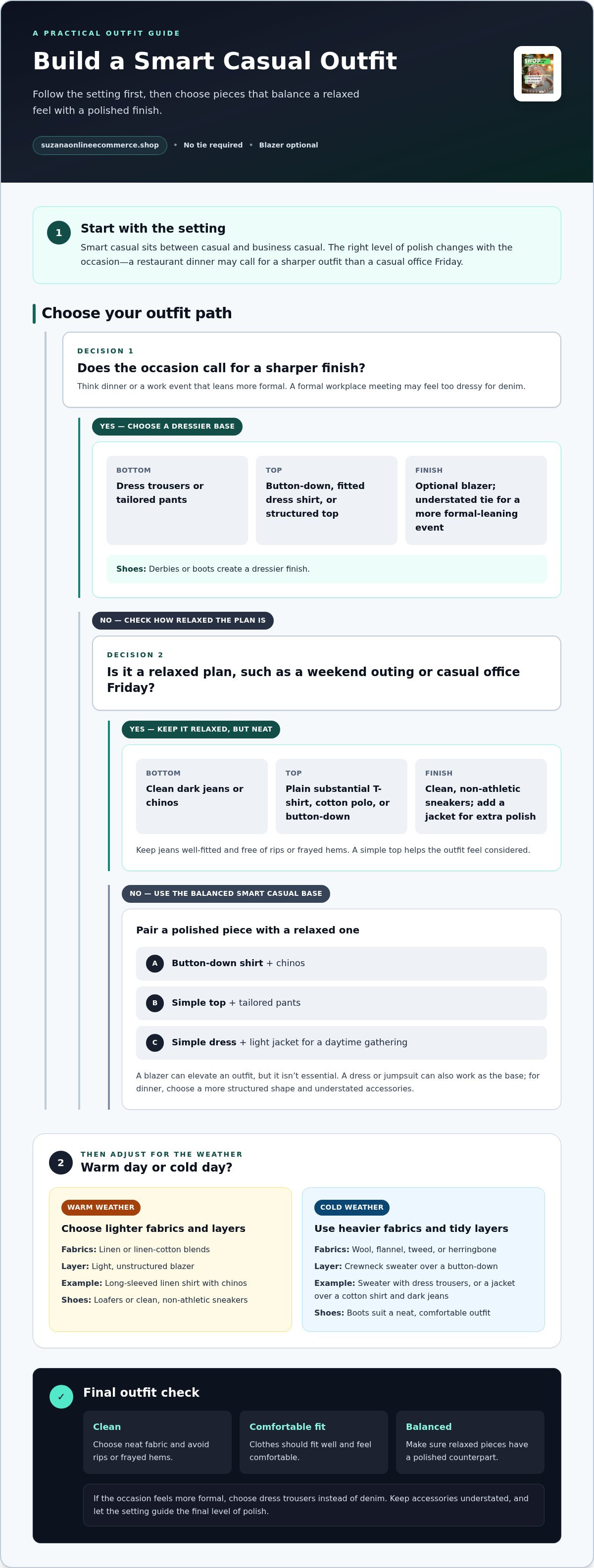
The smart casual dress code sits between casual and business casual. It pairs relaxed clothing with polished pieces for a put-together look. A tie isn’t required, and a blazer is optional. For example, wear a button-down shirt with chinos, or pair a simple top with tailored pants. The right level of polish depends on the setting, so a restaurant dinner may call for a sharper outfit than a casual office Friday.
Start with clothes that look neat and feel comfortable. A well-fitted dress shirt, an Oxford cloth button-down, or a clean crewneck sweater can work as a top. In warm weather, a clean cotton polo suits relaxed settings. For a casual weekend outing, choose a plain, substantial T-shirt with dark, well-fitted jeans, then add a jacket for extra polish.
For bottoms, consider chinos, dress trousers, or clean dark jeans without rips or frayed hems. Pair chinos with a button-down shirt for lunch with friends, or wear tailored pants with a simple top for dinner. A blazer can elevate either outfit, but it isn’t essential. Clean white leather sneakers without an athletic look suit relaxed plans, while derbies or boots create a dressier finish.
Dresses and jumpsuits can also make an easy base. For a daytime gathering, try a simple dress with a light jacket; for dinner, choose a more structured shape and understated accessories. Avoid overly revealing cuts, such as plunging necklines or very short hemlines. A polished layer can make a casual one-piece feel more suitable for a smart casual occasion.
For spring and summer, choose linen or linen-cotton blends in lighter colors. A long-sleeved linen shirt with chinos suits a summer wedding, while a cotton top and tailored pants work for a warm weekend lunch. Keep layers light, such as an unstructured blazer, and choose loafers or clean, non-athletic sneakers. The fabric and setting shape how formal the outfit feels.
Cold-weather outfits benefit from heavier fabrics, including wool, flannel, tweed, and herringbone. Try a crewneck sweater over a button-down with dress trousers, or layer a jacket over a cotton shirt and dark jeans. For a casual outing, a neat sweater, tailored pants, and boots balance comfort with a finished look. Keep athletic pieces, such as hoodies, joggers, and track jackets, for more relaxed dress codes.
Build your wardrobe around versatile pieces that mix easily. A neutral shirt, fitted pants, and a layer create a base you can adjust for the weather or your plans. Swap the sweater for a cotton polo on a warm afternoon, or add a blazer before dinner. These small changes keep an outfit relaxed without making it look unfinished.
2. FAQs about jeans, chinos, T-shirts, polos, and shorts
Can jeans be worn for smart casual, and which styles work? Yes, clean, dark-wash jeans with a neat fit suit many settings. Choose a classic straight or slim cut without rips, frayed hems, or heavy fading, then pair it with a polished top.
For a casual office Friday, dark jeans and a button-down shirt create a balanced outfit. For dinner, add a simple jacket or blazer and avoid distressed denim. The setting matters: jeans that suit a relaxed restaurant may feel too casual for a formal workplace meeting.
Jeans and sneakers can work together when the rest of the outfit looks considered. Choose clean sneakers without an athletic design, then add a tucked-in shirt, neat sweater, or structured jacket. A plain belt and tidy denim finish the look without making it feel overly dressed.
Chinos offer an easy alternative to jeans. Choose a pair that fits comfortably through the hips and legs without bunching around the ankles. Wear them with a button-down and loafers for a polished lunch outfit, or add a neutral polo for relaxed plans. Dress trousers also work when you want a sharper finish.
A T-shirt can fit this dress code if the fabric feels substantial and the design is simple. Choose a plain crewneck or V-neck, avoid graphic prints, and leave the hem near the beltline when wearing it untucked. With pleated tailored trousers, tuck the shirt in. A blazer can make this combination feel more intentional in a relaxed setting.
Polos work best with dressier pants, such as chinos, rather than athletic bottoms. Neutral colors keep the outfit classic and easy to style. For example, pair a navy polo with beige chinos and clean sneakers for a weekend outing. A bright polo can also work when balanced with quieter pieces.
Shorts call for more care. Choose a tailored pair in linen or a cotton-linen blend, with a hem above the knee. A simple shirt or polo gives the outfit a smarter finish than a graphic tee. This combination suits warm-weather lunches and casual daytime gatherings, but not every workplace or dinner setting.
Use a quick outfit check before heading out: look for clean fabric, a comfortable fit, and a clear balance between relaxed and polished pieces. Dark jeans, a plain T-shirt, and clean sneakers lean casual; switching to chinos and a button-down raises the formality. If the occasion feels more formal, choose dress trousers instead of denim.
3. Accessories and seasonal styling
Accessories help finish an outfit without making it overly formal. With a fitted shirt and chinos, add a simple belt that matches your shoes. A watch or understated earrings can add polish without competing with your clothes. Choose one accessory as the focus, such as a patterned scarf, and keep the rest simple. This makes a relaxed outfit look considered, not crowded.
Layering works best when each piece has a clear purpose. Start with a cotton shirt, add a fine-knit sweater, then finish with an unstructured blazer if the setting calls for extra polish. Check that the shirt collar sits neatly beneath the sweater and the sleeves don’t bunch under the jacket. On a warmer afternoon, remove the sweater and wear the blazer open. A clean, comfortable fit keeps the layers looking intentional.
A tie isn’t required, but it can suit occasions that lean more formal. For a dinner or work event, try a simple tie with a button-down shirt and tailored pants. Keep the tie understated, then balance it with relaxed details, such as a soft jacket or a minimal belt. Skip the tie for an informal lunch or weekend gathering. The overall outfit should feel coordinated rather than businesslike.
In spring and summer, choose lighter fabrics and accessories that won’t overwhelm the outfit. A linen shirt, light-colored trousers, and a slim belt make an easy combination for a daytime event. For a summer wedding, long sleeves in high-quality linen can add polish while staying seasonally appropriate. A small bag or simple jewelry keeps the look practical. If sun protection matters, choose garments labeled UPF 50+.
Cooler weather calls for warmer textures and thoughtful layers. Try a flannel shirt beneath a wool jacket, with a scarf adding color near your face. Tweed and herringbone can bring visual interest, so keep other accessories simple. Gloves and a structured bag can finish the outfit without making it feel too formal. Choose fabrics suited to the weather, then remove a layer indoors to stay comfortable.
For a relaxed weekend outing, pair a plain top and dark jeans with a neat jacket, then add a watch or small crossbody bag. For dinner, switch to tailored pants and loafers, keeping jewelry and other accents restrained. These small changes help the same wardrobe work for casual plans and smarter settings. Avoid athletic-looking accessories when the rest of your outfit is polished.
Before leaving, check the balance: do your accessories suit the setting, and can you move comfortably in every layer? A belt, watch, and scarf can each add something useful, but wearing all three with a patterned shirt may feel busy. For a fitted dress, choose one standout detail, such as simple earrings or a light jacket. Let the weather and occasion guide your final choices.
4. Color, prints, fit, and tailoring
Build a simple color palette before choosing prints. Combine two neutrals, such as navy trousers and a white shirt, with one accent color. A rust-colored bag or green top can add interest without making the outfit feel busy. Repeat one shade in a belt or jacket for a coordinated finish. This approach makes separate wardrobe pieces easy to mix.
Prints work best when the rest of the outfit stays simple. For example, pair a subtly striped shirt with solid trousers, or wear a small-patterned blouse beneath a plain blazer. Avoid combining several bold patterns, which can compete for attention. For dinner, a printed top with dark, tailored pants creates a clear focal point without feeling overly formal.
Fit shapes how polished clothes appear. Choose trousers that sit comfortably at the waist and fall cleanly without pulling or pooling. Ankle pants should end 1-2 inches above the ankle bone. A shirt should lie smoothly across the shoulders, with buttons staying flat when fastened. These details help everyday pieces look intentional, even without a jacket.
An unstructured blazer or sport coat adds polish without the stiffness of a formal suit jacket. For a relaxed combination, wear one with non-ripped jeans and a plain shirt. An unstructured jacket with soft, natural shoulders also creates an easy shape. A black blazer, non-ripped jeans, and ballet flats can read as business casual, so choose a softer layer for a more relaxed smart casual look.
Tailored trousers make a useful base for a neat outfit. Pair them with a simple top and blazer for dinner, or wear them with a fine sweater for a daytime event. Check that the hem works with your footwear and doesn’t drag. Comfort matters: trousers should allow easy movement while keeping a clean line through the leg.
Tailored shorts can suit smart casual summer plans when the event is relaxed. Choose an appropriate fabric, a neat fit, and a hem above the knee. Linen shorts with a button-down shirt create a breezy lunch outfit; a simple polo offers a more casual option. Avoid athletic shorts, overly baggy shapes, and gym-style details.
Use a final mirror check to balance color, pattern, and shape. If a bold print draws attention, keep the blazer and trousers understated. If the outfit uses only neutrals, one accent shade can lift it. A fitted dress or jumpsuit also benefits from clean lines and restrained accessories. Aim for a comfortable outfit that looks considered, not overly formal.
5. Smart casual compared with other dress codes
Yes, regional and cultural expectations can differ. Workplace norms, venue, and occasion all shape what feels appropriate, even within the United States. Dark jeans might suit a relaxed office Friday, while a restaurant dinner calls for sharper pieces. Treat the dress-code label as a starting point, then consider where you’re going and who you’ll meet.
Smart casual sits between casual and business casual. Think polished but relaxed: a button-down shirt, chinos, and loafers, or a simple dress with a neat jacket. A suit may look overdressed for this setting. Use a blazer or refined accessories to elevate the outfit when the venue feels dressier, without making the whole look formal.
Business casual usually calls for at least a dress shirt and trousers. Jeans are rarely appropriate unless the setting explicitly allows them. For example, tailored pants and a collared shirt are a safer office choice than dark denim and a T-shirt. A blazer adds polish, but the overall outfit should still feel less formal than a full suit.
Cocktail attire is a step more formal. It calls for a suit or at least a blazer with dress trousers, and jeans aren’t appropriate. A polished dress can suit the occasion, while leather shoes and refined accessories complete the sharper look. By contrast, shorts and casual sneakers don’t suit cocktail attire, even when clean and well kept.
Everyday casual allows more relaxed combinations, such as a graphic tee, jeans, and athletic sneakers. Smart casual adds polish: swap the graphic tee for a plain top, choose clean denim, and add loafers or a structured layer. For a weekend lunch, that small styling shift keeps the outfit comfortable without making it feel like office wear.
Use three cues to decide what to wear: the venue, the event, and the host’s wording. A casual office gathering may suit chinos and a polo; a dinner invitation at a refined restaurant may call for trousers and a blazer. If the dress code says cocktail, leave the jeans and shorts at home. For a smart casual event, skip the tie unless the setting suggests extra formality.
Once you’ve chosen the occasion’s formality, build around one polished piece and keep the rest balanced. Browse polished outfit options to put together a look that feels right for your plans.
MO. DA FASHION: Dresses
MO. DA FASHION offers dresses, tops, T-shirts, and pants for creating relaxed, polished outfits. Choose a simple dress for an easy one-piece look, or pair a neat top with tailored pants for dinner or a daytime gathering. A plain T-shirt and clean pants make a more casual starting point, ready for a blazer or understated accessories when the occasion calls for extra polish.
Explore these wardrobe staples as you plan a smart casual outfit with versatile pieces to style your way. Mix colors and layers to suit the season, setting, and your personal taste.
Visit suzanaonlineecommerce.shop to browse dresses and everyday outfit pieces.
Make Your Next Outfit Feel Like You
Use your next invitation to shape a look around your own style. Choose a piece you enjoy wearing, then build around its color, texture, or silhouette. This personal starting point can make the smart casual dress code feel less like a set of rules and more like an easy way to dress for the occasion.
MO. DA FASHION offers dresses, tops, and T-shirts for exploring different outfit combinations. A favorite dress can be the base for a fresh look, while a top or T-shirt gives you room to experiment with layers and accessories. Choose pieces that feel comfortable and suit your plans.
Ready to find a new starting point for your wardrobe? Browse dresses, tops, and T-shirts at MO. DA FASHION, and enjoy putting together a look that feels naturally yours.
Frequently Asked Questions
What Does Smart Casual Actually Mean?
Smart casual means combining relaxed clothes with polished details, rather than dressing fully formal or purely casual. Try a neat shirt, comfortable trousers, and a simple jacket for a look that works for daytime plans and dinner. Before heading out, check that each piece looks clean and fits comfortably. The venue and occasion help determine whether your outfit needs another polished layer.
Are casual items like jeans and sneakers ok in that case?
Yes, jeans and sneakers can work when they’re clean and the rest of the outfit feels intentional. For a gallery visit, pair dark denim with a plain shirt and simple sneakers, then add a neat jacket if the venue feels polished. Avoid distressed denim and athletic-looking sneakers. For a work event or formal dinner, choose trousers and dressier shoes instead.
Ok so then what makes it different from business casual?
Business casual generally leans more office-ready, while smart casual allows more relaxed pieces. A collared shirt and trousers create a business-casual base; dark jeans with a refined top may suit a more relaxed occasion. For a client meeting, consider the workplace and expected formality before choosing denim. If the invitation or office guidance sets a clear standard, follow it over a general dress-code label.
What does smart casual dress code mean?
The smart casual dress code calls for an outfit that feels relaxed but still looks considered. Think of it as a balance: choose one casual piece, then pair it with cleaner lines or a more polished layer. For a casual dinner, a simple top with neat pants can strike that balance. A tie isn’t necessary, and a full suit may feel too formal.
What are examples of smart casual outfits for men?
For a daytime event, try a fine-knit sweater with tailored trousers and derbies. For a relaxed dinner, wear a button-down shirt with dark jeans and a soft jacket. A neat polo with chinos also works for a casual gathering. Keep the fit comfortable and colors coordinated, then adjust the jacket or shirt to suit the venue’s level of polish.
What are examples of smart casual outfits for women?
A simple dress with a light jacket can suit a daytime gathering, while cigarette pants and a white button-down create a sharper option. For dinner, choose a neat top with tailored pants and understated accessories. A clean silhouette helps each look feel intentional. Choose comfortable pointed heels or another refined shoe that suits the setting and your plans.
What shoes are appropriate for a smart casual dress code?
Loafers, derbies, boots, boat shoes, and clean sneakers can all suit smart casual outfits. Choose shoes for the occasion: loafers pair neatly with trousers, while simple sneakers can work with dark jeans for relaxed plans. Keep shoes clean and avoid athletic styles. Slides, sandals, and visibly sporty trainers tend to make an outfit feel too casual.
What should you avoid wearing for smart casual?
Skip clothes that look strongly sporty or overly relaxed, such as joggers, athletic shorts, track jackets, and hoodies. Graphic tees can also make an outfit feel too casual for the occasion. Avoid ripped or frayed jeans and overly revealing cuts. For a dinner or work gathering, choose neat, comfortable pieces instead, and save gym-focused clothing for casual settings.


