

The thinnest-looking dress isn’t always the most comfortable one on a warm day. With lightweight summer day dresses, fabric, lining, cut, and fit all affect how cool, covered, and free to move you feel.
It’s easy to focus on color or silhouette while browsing, then wonder if a dress will feel too sheer, clingy, or restrictive once you’re wearing it. The right choice depends on your plans and the weather, not just how light the fabric looks.
This guide breaks down what to compare, from breathable fabrics such as cotton, linen, and rayon to details like lining, straps, and skirt shape. You’ll learn how to balance airflow with coverage, choose a fit for everything from relaxed outings to busier days, and use a simple checklist when shopping online. A few easy styling ideas will help you make an everyday dress work for more of your summer plans.
Key Takeaways
- Lightweight summer day dresses are about more than thin fabric; consider how the full garment feels and moves throughout the day.
- Compare fabric descriptions, weave, lining, and layers to judge likely airflow, drape, and coverage.
- Choose a dress shape and length that feels practical for your plans, from walking and errands to sitting comfortably.
- Build an easy outfit by checking the forecast first, choosing your preferred coverage, then adding simple layers or accessories.
- Before buying online, review the listing for fabric composition, measurements, fit, care, and intended use.
What Makes a Summer Day Dress Feel Lightweight?
A lightweight summer day dress is one that feels easy to wear because its fabric weight, construction, and fit work well together. The term describes the overall feel, not a guarantee that a dress is sheer, cooling, or right for every warm-weather setting. Fabric, lining, coverage, and your planned activity all shape whether it feels comfortable in use.
A thin fabric can still feel clingy or offer less coverage than you want. A dress with a little more structure may feel easier to wear if it moves comfortably and suits the day’s plans. For a general introduction to what a sundress is, see its common association with a loose, warm-weather style. That description can be a helpful starting point, but dresses vary in construction and feel.
Does lightweight always mean cooler?
No. Comfort depends on more than thickness. The fabric’s weave, the number of layers, how closely the dress sits against your body, and the day’s humidity can all affect how it feels. A light fabric with a close fit may feel different from a roomier dress made with a more substantial fabric. Personal preference matters, too: some people prefer a breezier shape, while others want a closer fit or more coverage.
Think of “lightweight” as a clue to investigate, not a performance promise. Look for details that help you picture the dress in motion, such as whether it’s lined, how full the skirt is, and whether the cut allows you to walk and sit comfortably.
What to check before choosing a day dress
Before choosing among lightweight summer day dresses, use the product details to narrow down what may suit your day. Fabric names such as cotton or linen are general examples you might see in clothing descriptions, not a guarantee of what any particular store carries. Check the full listing for the actual fabric composition and construction.
- Fabric description: Check the listed material and whether the fabric is described as woven, soft, or structured.
- Lining and opacity: Look for lining details and consider whether the color or fabric may need an extra layer for your comfort.
- Care instructions: Check how the dress should be washed and dried before adding it to your regular rotation.
- Weather and plans: Consider the forecast, your setting, and whether you’ll be walking, sitting, or moving around often.
These checks make “lightweight” more personal and practical. A dress that suits a relaxed afternoon may not offer the coverage or ease you want for a long day out, so weigh the listing details against how you plan to wear it.
Which Fabrics and Dress Details Matter in Warm Weather?
Fabric names are a useful starting point, not a comfort guarantee. Cotton, linen, and viscose can each feel different depending on the fabric’s weight, weave, finish, and how the dress is designed. A close-fitting, layered dress may feel quite different from a loose shape made with a similar material. Treat these as general examples, then check the exact composition and construction listed for each dress.
How cotton, linen, and viscose may differ
Cotton is a familiar natural fiber used in many types of clothing, while linen is made from flax and often has a more textured look. Viscose is a manufactured fiber that can feel soft and drape fluidly, though the result depends on the fabric. None is automatically the coolest or most comfortable choice. For a little context on how day dresses have changed over time, explore the history of the day dress.
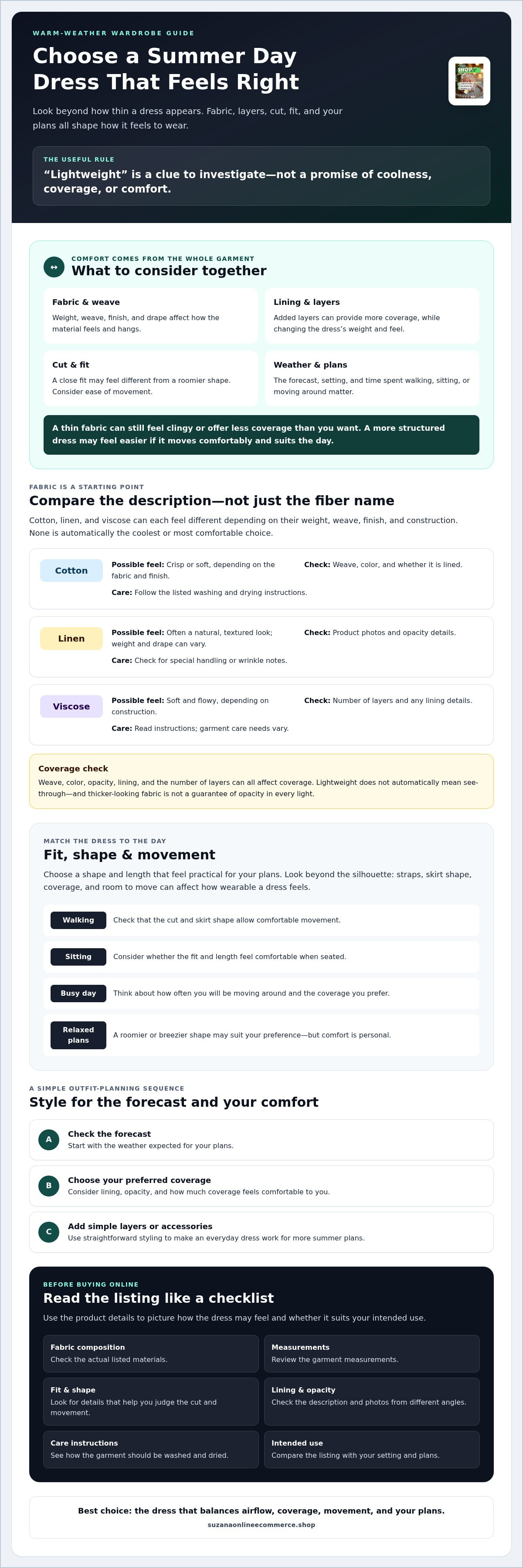
Fiber names don’t tell the whole story. A dense weave, added lining, or multiple layers can change how a dress hangs and how much coverage it provides. Use the comparison below as a prompt for what to check, rather than a ranking.
| Fabric example | Possible feel | Coverage considerations | Care checks |
|---|---|---|---|
| Cotton | May feel crisp or soft, depending on the fabric and finish. | Check weave, color, and whether it’s lined. | Follow the listed wash and drying instructions. |
| Linen | Often has a natural, textured look; weight and drape can vary. | Look closely at product photos and opacity details. | Check whether the care label notes special handling or wrinkles. |
| Viscose | Can feel soft and flowy, depending on its construction. | Check the number of layers and any lining details. | Read instructions carefully, as care needs vary by garment. |
Why lining, weave, and opacity deserve a second look
A lining adds another layer, which can provide more coverage but may change the dress’s weight and feel. The weave and color also affect how opaque fabric appears. Lightweight doesn’t automatically mean see-through, just as a thicker-looking fabric isn’t guaranteed to feel fully opaque in every light. Review photos from different angles and check the description for lining information. If it isn’t clear, don’t assume.
For a more confident choice, compare composition, lining, photos, and care notes together. You can also browse dresses online and use those details to assess each listing individually.
How Should Fit and Dress Shape Match Your Summer Plans?
A comfortable fit depends on where you’re going and how you’ll spend the day. For a relaxed outing, you might prefer a shape that allows airflow and easy movement. For commuting or errands, consider whether the length feels manageable on stairs, while walking, and when sitting. Think about coverage, too: the neckline, sleeves, and skirt length should feel right for your setting and personal comfort.
Clothing is one part of dressing for warm weather. Texas A&M AgriLife Extension shares practical guidance on how your body reacts to heat, a useful reminder to consider the day’s conditions alongside the look and feel of a dress.
Choosing an easy silhouette for everyday wear
Familiar shapes such as A-line, shift, shirt, midi, and maxi dresses can help you picture the amount of room and coverage you may want. These are general examples, not a promise that a specific store carries each style. A fuller skirt may give your legs more room to move, while a straighter shape may feel simpler under a light layer. Either can work well if the fit suits you.
A loose silhouette isn’t the only route to comfort. A closer fit may feel easy if it doesn’t pull across the shoulders, chest, or hips, and the fabric allows you to move freely. Picture your actual plans: reaching, bending, walking, and sitting. The best shape is the one that feels comfortable through those ordinary movements.
Checking fit information when shopping online
Product pages may include a size chart, garment measurements, or notes about the fit. Compare those details with a dress you already find comfortable, checking the measurements that matter most to you. Don’t rely on a size label alone, since sizing and shape can vary between garments.
- Length: Check where the hem is likely to fall and whether it suits your plans.
- Room to move: Look for fit notes and consider how the dress may sit when walking or sitting.
- Coverage: Review details about sleeves, neckline, and skirt shape against your comfort preferences.
- Ordering details: Check the current product information and the store’s return policy before placing an order.
Use this checklist to narrow down lightweight summer day dresses that fit your routine, not just a photo. A little attention to measurements and movement can make online browsing feel more straightforward.
How Can You Style and Care for a Lightweight Summer Day Dress?
A simple plan helps a dress feel comfortable through changing summer conditions. First, check the forecast, including whether the day may turn cooler or breezier. Next, choose the coverage that feels right for your setting and time outdoors. Then add a light layer or familiar accessories if they’ll make the outfit more practical.
With lightweight summer day dresses, styling doesn’t need to be complicated. A bag, sunglasses, or simple jewelry can give an everyday outfit a finished feel. Let comfort lead, and use pieces you already enjoy wearing.
Simple ways to adapt a dress for different plans
For errands, keep things easy with a comfortable bag and accessories that won’t get in the way. For a casual lunch, try adding jewelry or a light shirt or jacket if you want another layer. If you’ll spend time outdoors, consider a hat or sunglasses and check whether your dress provides the coverage you prefer. These are flexible ideas, not rules: the best combination depends on the weather and your plans.
Keep a layer handy if your day includes both sunny outdoor time and cooler indoor spaces. You can wear it over your shoulders or put it on as conditions change. A few small choices can shift the feel of an outfit without requiring a full change.
How to care for lightweight fabrics
Check the care label before washing, drying, or ironing a dress. Instructions can vary with fabric composition, lining, trims, and construction, so general advice may not suit every garment. If a product listing includes care details, read those before buying, then follow the garment’s label once it’s in your wardrobe.
Don’t assume a dress can be machine-washed, tumble-dried, or treated the same way as another item made from a similar-looking fabric. When care instructions call for a specific method, use that guidance. Careful handling can help you look after the dress while keeping its shape and finish in mind.
Before choosing a dress, consider how you’ll style it and whether its care needs fit your routine. You can browse the dress selection and check each listing for its current product and care details.
How to Choose a Lightweight Summer Day Dress Online
Online listings can help you narrow down a dress, but the details matter more than a single “lightweight” label. Check the fabric, construction, measurements, and care information, then picture how the dress would work for your summer plans. A clear checklist makes it easier to compare options without guessing from photos alone.
A quick product-page checklist before you decide
Before choosing among lightweight summer day dresses, review the current listing and look for the details that affect comfort and everyday use:
- Fabric composition: Read the listed materials rather than relying on a general fabric description.
- Lining and coverage: Check whether the description mentions a lining, and review photos for clues about layers and opacity.
- Measurements and sizing: Use any available size chart or garment measurements. Compare them with a dress you already find comfortable, especially at the areas that affect movement.
- Fit details: Look for notes about the shape or ease, then consider whether it suits your preferred fit.
- Care instructions: Check the listed care guidance so you know what the garment requires.
- Intended use: Think about the weather, setting, and activities. A dress for a relaxed afternoon may need different coverage or movement than one for a full day of errands.
Product photos can add useful context, but they can’t answer every question about feel or fit. Give the written details a close read, and confirm the information on the live product page before ordering. Listings and inventory can change, so don’t rely on an older description or assume every dress has the same features.
For more online shopping pointers, read this smart guide to buying dresses online. It offers broader advice to help you assess listings and make a considered choice.
Where to go next for relaxed summer dressing
Fabric, construction, and fit work together. No single detail guarantees that a dress will feel right for every person or plan, so use the listing to check how its features match your own comfort preferences. Take your time, compare the details, and choose what feels suitable for your day.
If you’re ready to browse, browse dresses at MO. DA FASHION. Check each live listing for current product details as you explore.
Choose a Dress That Feels Right for Your Summer
The best lightweight summer day dresses are more than a fabric choice. Comfort comes from how fabric, lining, shape, and fit work together, along with the coverage and ease you want for your plans. Before ordering, check the current listing for composition, measurements, care details, and any information that helps you picture the dress in use.
Small styling choices can help you adapt a dress to the day, while following its care instructions can help you look after it. Use your own comfort preferences as your guide, and take a moment to compare product details rather than relying on a label or photo alone.
MO. DA FASHION offers dresses through an online store where you can browse products, save options to a wishlist, and shop through the cart and checkout. Product details and availability may vary, so review each live listing as you explore.
Browse dresses at MO. DA FASHION whenever you’re ready. A little thoughtful browsing can help you find a dress that feels like a natural fit for your summer days.
Frequently Asked Questions
Are lightweight summer day dresses always cooler to wear?
No, a lightweight label alone can’t guarantee that a dress will feel cool. Fabric composition, weave, lining, fit, weather, and personal preference all play a part. Check the product description for details about layers and coverage, then consider what you’ll be doing while wearing it. A dress for a breezy walk may feel different from one worn through a humid day. If a detail you need isn’t clear, verify it before ordering.
Which fabrics are commonly used for lightweight summer dresses?
Cotton, linen, and viscose are fabric terms you may see in summer dress listings. Each can feel different depending on its weight, weave, finish, lining, and the dress’s shape. Fiber names alone can’t tell you exactly how a finished garment will feel or drape. Read the full fabric composition and construction details on the specific product page, rather than relying on a general rule that one material is always best for warm weather.
Can a lightweight summer dress be opaque?
Yes, a lightweight dress can provide coverage, but opacity depends on its fabric, color, weave, and lining. Check the product description for lining details, and review photos from different angles. Photos may not show how fabric looks in every lighting condition, so don’t treat them as a guarantee. Use any additional product information available on the listing, and avoid assuming a dress is either sheer or fully opaque just because it’s described as lightweight.
How should a summer day dress fit for comfortable everyday wear?
A comfortable fit depends on your preferences and planned activities. Consider length, coverage, and whether the dress allows you to walk, sit, and move without feeling restricted. There’s no single silhouette that works best for everyone; a closer fit or a roomier shape may suit you, depending on the garment. For online shopping, check the available size chart and measurements, then compare them with a dress you already find comfortable.
What should I check before buying a lightweight dress online?
Review the fabric composition, construction, lining information, measurements, care instructions, and product photos. Consider whether the dress’s listed fit and coverage suit your plans, such as errands or time outdoors. Check the store’s current sizing and order policies before checkout. Product details and stock can change, so rely on the live listing rather than assuming a particular fabric, feature, or style is available. If essential information is missing, verify it before ordering.
How do I care for a lightweight summer dress?
Follow the care label on the specific garment. Washing and drying guidance can depend on fabric composition, lining, and construction, so one rule won’t suit every dress. Before washing, check the label for instructions about water temperature, cycle, and drying method. If the product page includes care details, use them as additional guidance. Don’t assume a lightweight dress can be machine-washed or tumble-dried unless its instructions say so.
What can I wear with a lightweight summer day dress?
Pair a lightweight summer day dress with accessories and layers that suit your plans and comfort preferences. A light shirt or jacket can add coverage if the weather or setting changes, while a bag, sunglasses, or simple jewelry can keep the look relaxed. Choose footwear you already own based on where you’re going and how much walking you expect. Keep the outfit easy, and adjust it to the day rather than relying on one formula.

