
A suit doesn’t need a tie to look polished. Pair it with a plain, fitted T-shirt, a knit polo, or an open-collar shirt for a more relaxed feel. To learn how to style a suit casually, start with one simple swap and keep the fit clean and intentional.
Finding the right balance can be tricky: too formal, and the outfit feels stiff; too relaxed, and it can look thrown together. Soften one part of the look while keeping the rest neat.
Explore simple ways to wear a suit for dinners, dates, the office, travel, and relaxed weddings. You’ll also find ideas for pairing a blazer with separate trousers, along with practical tips for choosing shirts, colors, and layers for different occasions.
Key Takeaways
- Use a pocket square or distinctive shirt to add personality to a relaxed, tieless look.
- Pair a blazer with separate trousers for smart-casual plans, choosing pieces that look balanced together.
- Adjust your suit, shirt, and layers to suit the occasion, from dinner plans to travel and relaxed weddings.
- Keep the fit neat and soften the outfit one formal element at a time for a polished, easygoing feel.
1. When Should Men Wear Casual Suits?
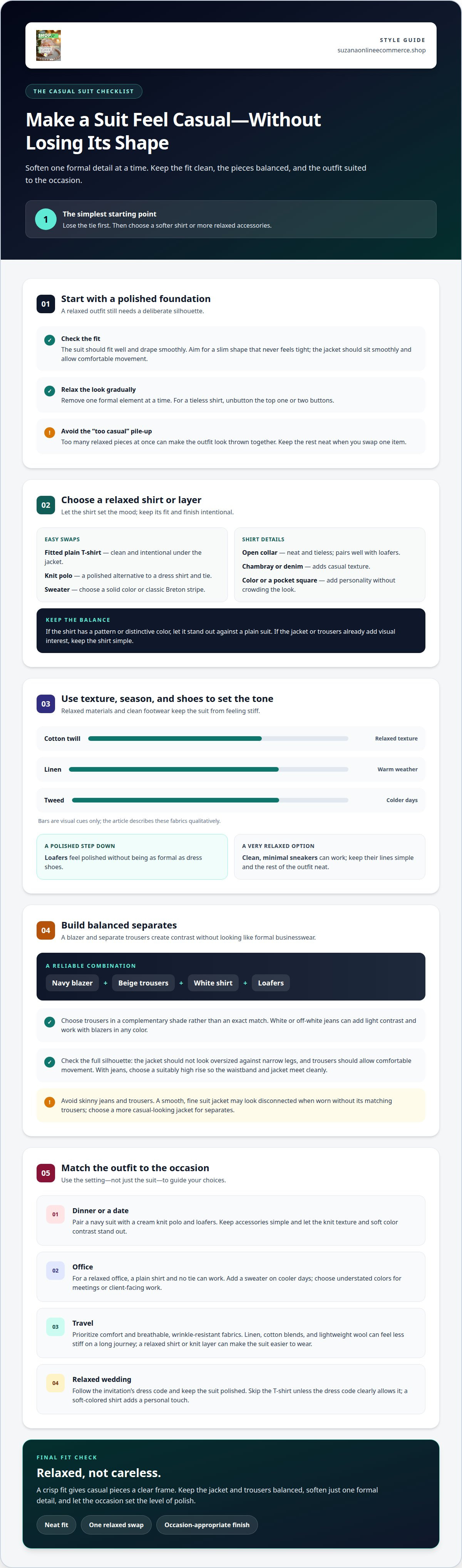
Casual suits work for dinners, weekend plans, and social settings where a full formal look feels too dressy. A useful starting point for how to style a suit casually is to swap the dress shirt and tie for a knit polo, sweater, or plain T-shirt. Choose a fitted, clean T-shirt so it looks intentional under the jacket. A solid-color or classic Breton-stripe crewneck sweater is another easy layer.
Shirt choice sets the mood. Wear an open-collar shirt with loafers for a neat, tieless outfit, or choose a colorful shirt for a weekend feel. Chambray and denim shirts add casual texture, while traditional American dressers may prefer a button-down collar. A pocket square can bring personality without making the outfit feel formal. Try a simple square with a distinctive shirt, or let a patterned shirt stand out against a plain suit.
Navy is a versatile color for a casual suit. Cotton twill, linen, and tweed create a more relaxed impression than smooth, fine suit fabric. Choose linen for warm weather and tweed for winter, then match your shirt and accessories to the season.
Loafers feel polished without being as formal as dress shoes. For a very relaxed look, clean, minimal sneakers can work with a suit. Keep their lines simple and the rest of the outfit neat.
A casual suit should fit well, drape cleanly, and look slim without feeling tight. Check that the jacket sits smoothly and allows comfortable movement. A crisp fit gives casual pieces a clear, considered frame.
Common mistakes include wearing a suit that pulls or hangs loosely, pairing casual styling with overly formal calf-leather shoes, and adding too many relaxed pieces at once. For a tieless outfit, unbutton the top one or two shirt buttons. If you're deciding how to style a suit casually, remove one formal element at a time. Add a pocket square or distinctive shirt for character without crowding the look.
2. Blazers with separate trousers
A blazer with separate trousers creates a smart-casual outfit with more contrast than a matching suit. Start with a navy blazer, beige trousers, a white shirt, and loafers. The combination feels pulled together without looking like formal businesswear. Keep the shirt simple if the jacket or trousers already add visual interest. For a softer effect, choose trousers in a complementary shade rather than an exact match for the blazer.
Jeans can work with a tailored jacket, but their rise and shape matter. Choose a suitably high rise so the jacket and waistband meet cleanly. White or off-white jeans offer a neat middle ground between blue denim and dressier trousers. They pair with blazers in any color, adding light contrast to the outfit. Keep the rest simple, such as a plain shirt beneath the jacket.
Fit helps separate pieces look intentional. Avoid skinny jeans and trousers, which can make a tailored jacket feel out of balance. Slim-fit trousers may suit a slim wearer if they sit high enough at the waist. Check the whole silhouette: the jacket shouldn’t look oversized against narrow legs, and the trousers should allow comfortable movement.
Not every suit jacket works as a blazer. A jacket made from smooth, fine fabric is designed to pair with its matching suit trousers; worn separately, it can look disconnected. Choose a more casual-looking jacket for separates, then build around its texture and color. A chambray shirt, for example, adds a relaxed contrast, while beige trousers keep a navy jacket crisp. Browse casual suit options for another starting point when planning coordinated separates.
3. Casual suits for dinners, dates, offices, travel, and weddings
For dinner or a date, pair a navy suit with a cream knit polo and loafers. This combination feels relaxed but polished for an evening out or rooftop event. Knowing how to style a suit casually for a date starts with matching the outfit to the setting. Keep accessories simple, so the knit texture and soft color contrast stand out. An open collar makes the look feel less businesslike.
At the office, let the dress code guide your choices. A suit with a plain shirt and no tie can work in a relaxed office, while a sweater adds an easy layer on cooler days. Keep the jacket and trousers coordinated, and choose understated colors for meetings or client-facing work. A more colorful shirt can add personality on a less formal workday.
For travel, prioritize comfort and fabrics that breathe and resist wrinkles. Linen, cotton blends, and lightweight wool can feel less stiff on a long journey. A relaxed shirt or knit layer makes a suit easier to wear between the airport and your destination. Some suit wearers choose a more casual outfit for air travel because of possible spills or illness from other passengers. How to style a suit casually for a trip depends on comfort as well as appearance.
A relaxed wedding still calls for care. Follow the invitation’s dress code, and keep the suit polished with a shirt and neat finishing touches. Skip the T-shirt unless the dress code clearly allows it. A soft-colored shirt can add a personal touch while remaining appropriate for the celebration.
Match each outfit to the setting, not just the suit. A cream polo and navy suit work for an evening plan; a simple shirt and sweater suit an office day. For a wedding, let the stated dress code set the formality. These choices help one suit work across different plans without making every occasion feel the same.
4. How to wear a suit casually without looking overdressed
Keep the outfit intentional by changing one formal detail at a time. Remove the tie first, then choose a softer shirt or more relaxed accessories. This gradual approach preserves the suit’s clean lines without making every piece feel office-ready. The suit should fit well and drape smoothly, with a slim shape that never feels tight.
Texture can make an outfit feel less formal without adding visual clutter. Try a chambray shirt under a tailored jacket, or pair a charcoal plaid suit with a black sweater and black shoes for a coordinated, understated look. Cotton twill, linen, and tweed also give suits a more casual feel. Choose linen for warm weather and tweed for colder days, so the fabric suits the season and setting.
Accessories make a difference. Without a tie, a neckerchief or scarf adds interest around the collar while keeping the look relaxed. Suede shoes can soften a blazer outfit, while clean-lined minimal sneakers suit especially casual plans. Keep sneaker colors simple, and avoid combining them with several attention-grabbing accessories. One contrast, such as a patterned jacket or textured scarf, is usually enough.
With a tieless shirt, leave the top one or two buttons open and keep the collar neat. Avoid a loose jacket, a tight silhouette, or dressy calf-leather shoes that clash with casual pieces. A pocket square can add personality, but it should complement the shirt rather than compete with it. These choices help a suit feel relaxed yet polished.
Use the occasion as your final guide. A minimal sneaker may suit a casual daytime plan, while suede shoes and a scarf create a more considered evening outfit. For an event where a suit feels too formal, explore occasion dresses as another polished option.
MO. DA FASHION: Suits
MO. DA FASHION offers suits for polished looks that can feel relaxed across different occasions. Choose a suit as your starting point, then make it less formal with a T-shirt or shirt. A plain tee creates an easy weekend outfit, while a shirt gives dinners and social plans a sharper finish.
Turn to MO. DA FASHION for a suit to style your way or simple pieces to wear with one. Shirts and T-shirts pair naturally with casual suit looks, while dresses and tops offer options for other wardrobe plans.
Explore suits, shirts, and T-shirts at MO. DA FASHION to find pieces for your next casual suit look.
Make Your Next Suit Feel Like You
A good casual look starts with what feels natural to wear. As you practice how to style a suit casually, let your plans and personal taste guide each choice. A relaxed dinner outfit is a useful starting point; small changes can adapt the same approach for another day.
Keep experimenting with pieces you enjoy. Try a new shirt or layer, notice how it changes the mood, and make the look your own. The best outfit feels comfortable and considered, not like a costume.
Ready to find a suit for your next outfit? Contact MO. DA FASHION about suits, and take the next step toward a look that feels like you.
Frequently Asked Questions
What Is a Casual Suit?
A casual suit is a coordinated jacket and trousers styled for a less formal setting. Its relaxed feel can come from the fabric, the cut, or the pieces worn underneath. For example, a suit with a softer-looking finish and a simple shirt can feel more laid-back than a crisp office outfit. The occasion and overall styling help set the level of formality.
When Should Men Wear Casual Suits?
Wear a casual suit for social plans when you want to look put together without feeling overly formal. It can suit a weekend brunch, a relaxed dinner, or an informal workday. Use the event’s dress expectations as your guide: a casual suit can work for a laid-back gathering, while a formal occasion may call for a dressier approach.
What Shirts or T-Shirts Work with a Casual Suit?
A plain T-shirt, knit polo, or relaxed button-front shirt can work with a casual suit. Choose a neckline and color that sit comfortably under the jacket without competing with its pattern. A solid tee, for example, can balance a checked jacket, while a subtle shirt pattern can add interest to a plain suit. Choose fabric that layers neatly.
Can You Wear Suit Separates Casually?
Yes, suit separates can create a casual outfit when the jacket and trousers look natural together. Build contrast through color or texture, such as a dark jacket with lighter trousers, rather than pairing pieces that almost match. A suit jacket designed for a smooth, matching set may look out of place on its own, so choose one with a more relaxed appearance.
How to Accessorize a Suit for a Relaxed Outfit?
Choose one accessory to give the outfit a personal touch. A pocket square can add color, while a scarf or neckerchief brings interest around an open collar. If you wear a tie, a tie bar can keep it neatly in place. Coordinate accessories with one element of the outfit, such as the shirt or jacket pattern, instead of matching every detail exactly.


