
A polished look starts with smart wardrobe choices, not a full closet. The practical answer to how to look expensive on a budget is to focus on versatile pieces: blazers, tailored pants, quality basics, and dresses.
Well-chosen staples and thoughtful outfits can make a refined look feel achievable. Choose pieces that work together, fit neatly, and simplify everyday dressing instead of chasing every new trend.
Here’s what to prioritize, how to style each category, and how to put together outfits without overspending. From everyday basics to polished layers, these ideas make a considered wardrobe easier to build.
Key Takeaways
- Use a well-fitting blazer and tailored pants to create a polished outfit, then keep the styling simple.
- Choose versatile basics that coordinate easily, so a few thoughtful pieces can support more outfits.
- Look for dress shapes and skirt styles that feel comfortable and easy to wear for different occasions.
- Layer knitwear with other wardrobe staples to add texture and make everyday outfits feel more considered.
1. Blazers and tailored pants
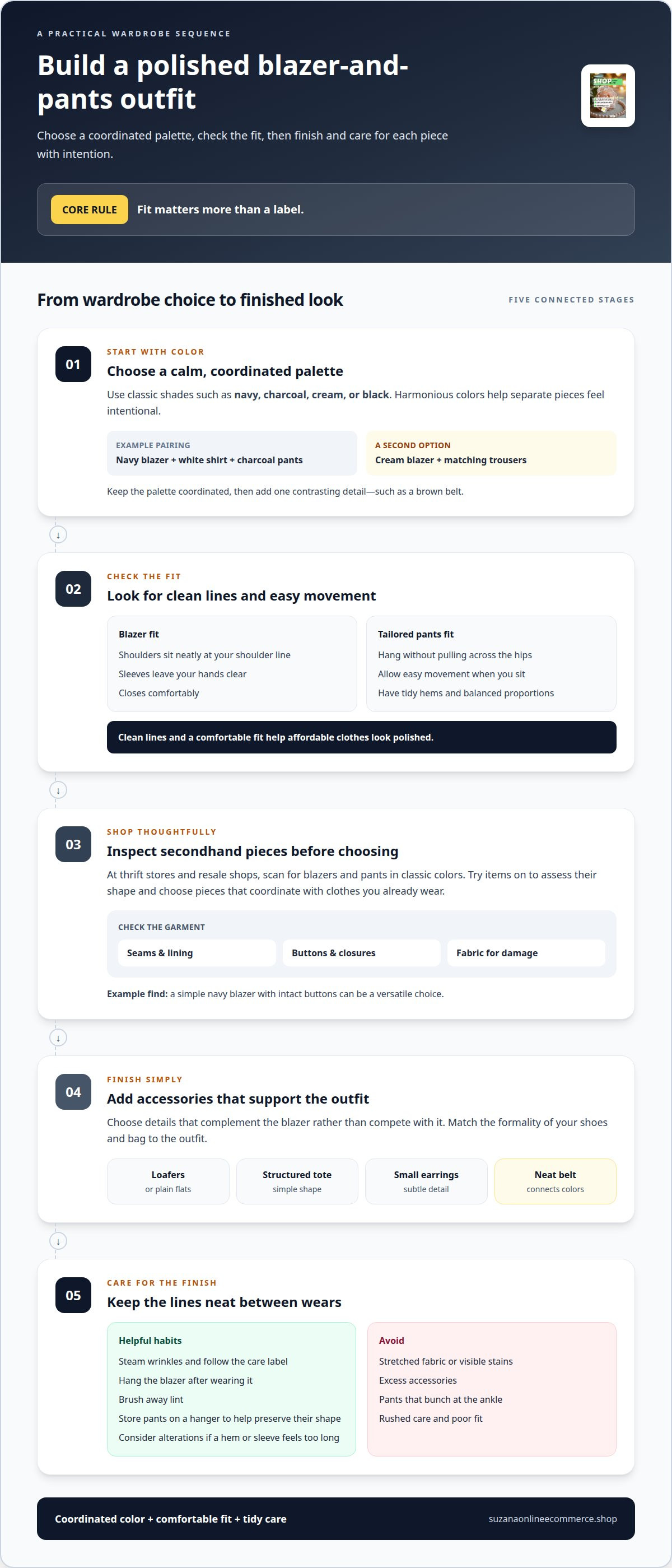
Choose calm colors such as navy, charcoal, cream, or black for a polished outfit. Try a navy blazer with a white shirt and charcoal pants, or pair a cream blazer with matching trousers. Keep the palette coordinated, then add one contrasting detail, such as a brown belt. Harmonious colors make separate pieces feel intentional.
Fit matters more than a label. Look for blazer shoulders that sit neatly at your shoulder line, sleeves that leave your hands clear, and pants that hang without pulling across the hips. A blazer should close comfortably, while tailored pants should allow easy movement when you sit. Clean lines, balanced proportions, and tidy hems help affordable clothes look polished.
At thrift stores and resale shops, scan racks for blazers and pants in classic colors. Check the seams, lining, buttons, closures, and fabric for damage, then try pieces on to assess their shape. A simple navy blazer with intact buttons can be a versatile find. Choose items that coordinate with clothes you already wear.
Finish the outfit with simple accessories. Loafers or plain flats, a structured tote, and small earrings can complement a blazer without competing with it. Match the formality of your shoes and bag to the outfit. A neat belt can also connect a blazer and pants, especially when their colors differ.
Before dressing, steam wrinkles and follow each garment’s care label. Hang a blazer after wearing it, brush away lint, and store pants on a hanger to help preserve their shape. If a hem or sleeve feels too long, alterations can improve the overall line. Avoid stretched fabric, visible stains, excess accessories, and pants that bunch at the ankle. Rushed care and poor fit can undercut an otherwise coordinated outfit.
2. Choosing high-quality basics
Start with basics you can wear in different settings. A white T-shirt works with dark jeans, under a cardigan, or tucked into a skirt. A simple shirt can look relaxed or polished with a change of accessories. Choose shapes that suit your routine, not pieces that match only one outfit. A coordinated selection makes getting dressed easier and helps each item earn its place.
Fabric affects how a basic looks and feels. Cotton, linen, and soft fabric blends can be affordable options, depending on the garment. Look for fabric that feels comfortable, hangs smoothly, and isn’t transparent where you want coverage. Check the label and garment in natural light. A cotton shirt with an even surface, for example, can look crisp when clean and pressed.
Inspect construction before choosing a piece. Check seams for loose threads, hems for even stitching, and buttons for secure attachment. Hold a T-shirt up to see whether its shape looks balanced and its side seams hang straight. Gently stretch a fabric section and see whether it returns to shape. These quick checks help you assess how well a basic may hold up to regular wear.
Color and condition matter, too. Cream, navy, black, and soft gray pair easily with other wardrobe pieces. Compare shades to make sure they coordinate, especially when buying separates. Avoid faded areas, pilling, stretched necklines, and visible marks. A fresh-looking basic in a simple color often fits into more outfits than a heavily decorated one.
Care helps everyday pieces look neat. Follow the garment’s care label, remove lint, and fold or hang items to prevent creases. Wash similar colors together, and avoid leaving clean clothes crumpled in a basket. Before buying, picture the item with clothes you already own. A white T-shirt that works with several outfits is more useful than one that requires a whole new look.
3. Dresses and skirts
An easy answer to how to look expensive on a budget is to choose a dress with a clean, balanced shape. Try a simple shirt dress with a narrow belt or a softly shaped style with a neat neckline. Check how it sits at the shoulders and waist. A comfortable fit that stays smooth as you move looks more considered than a piece that needs constant adjusting.
For skirts, choose a shape that works with tops already in your closet. A straight skirt pairs well with a tucked-in T-shirt, while a softly flared style balances a fitted top. Consider proportions: define the waist with a loose blouse, or pair a longer top with a straighter skirt. Small styling choices make an outfit feel deliberate.
Test the length and movement before deciding. Walk, sit, and turn in the dress or skirt. Notice whether the hem hangs evenly, the fabric pulls, or the garment twists. A piece that moves comfortably is easier to wear throughout the day. Check the closure and seams, too, so construction issues don’t distract from the outfit.
Keep accessories in step with the garment. A solid-color dress leaves room for a scarf or simple earrings, while a printed skirt often works best with a plain top. Choose a bag and shoes suited to the occasion. Competing patterns, shiny details, or prominent logos can distract from the overall look.
Before choosing a piece, imagine how it will work for different plans. Wear a black dress with a cardigan during the day, then add a jacket for a more structured look. Pair a neutral skirt with a shirt or knit top. If you’re considering how to look expensive on a budget, versatility matters: choose a dress or skirt that fits your routine and combines easily with clothes you own.
That approach also leaves room to adapt a favorite piece rather than treating it as a one-time outfit. The author said she intended to continue dressing glamorously on a budget throughout 2026. Keep the focus on fit, neat finishing, and combinations that feel natural for your day; a dress or skirt earns its place when it can be worn with confidence and without extra fuss.
4. Knitwear and layering pieces
A fine-knit sweater can soften a structured outfit without making it look busy. Try a crewneck over a collared shirt, with the collar and cuffs showing neatly. For a relaxed combination, wear a cardigan over a plain T-shirt and straight-leg pants. Choose layers that sit smoothly together instead of bunching at the shoulders or waist.
Keep the color palette calm. A cream cardigan works with navy pants, while a charcoal sweater pairs easily with a white shirt. Similar tones create a coordinated look, and a gentle contrast adds interest. If your sweater has a bold pattern, keep the shirt and pants simple. This lets the knitwear stand out without competing details.
Check the fit before choosing a layer. Shoulder seams should sit naturally, sleeves shouldn’t cover your hands, and hems should meet the layer beneath cleanly. Try a jacket over your usual sweater to see whether you can move your arms comfortably. A bulky knit under a fitted jacket can pull and wrinkle, so lighter layers often work better together.
Texture adds depth, but condition matters. Look for loose threads, pilling, stretched cuffs, and uneven hems. A smooth knit can look crisp with tailored pants, while a textured cardigan adds interest to a plain dress. Brush away lint before wearing, and fold heavier sweaters instead of hanging them. These small care steps help maintain their shape.
Build outfits around pieces you already wear. Layer a cardigan over a shirt for work, then switch to a simple T-shirt for a casual outing. A lightweight jacket can add definition over a fine-knit top without overwhelming it. Keep the final look balanced: one textured layer, clean lines, and accessories that don’t crowd the neckline. Explore versatile wardrobe pieces to find simple layers for everyday outfits.
The guiding idea is to focus on affordable fashion that looks polished. When choosing a knit or layer, favor a clean finish and a shape that works with pieces already in your wardrobe. A considered combination can feel refined without a crowded outfit. Keep the styling simple and let one well-chosen layer provide the finishing touch.
MO. DA FASHION: Dresses
MO. DA FASHION offers dresses and wardrobe staples for polished everyday outfits. Browse the selection for a dress that can stand on its own or separates that work with items already in your closet.
For a clean, coordinated look, pair a dress with understated accessories. Prefer separates? Combine a top or T-shirt with pants, then keep the colors and styling simple. These versatile starting points make it easier to create considered outfits without unnecessary detail.
Browse dresses, tops, T-shirts, and pants at MO. DA FASHION. Visit suzanaonlineecommerce.shop to explore the collection.
Build a Signature Look That Feels Like You
Your next step in learning how to look expensive on a budget is to notice which outfits make you feel comfortable and put-together. Use those looks to guide future choices. Personal style doesn’t require a complete wardrobe overhaul; it can grow through small, thoughtful decisions that suit your everyday plans.
Before adding something new, consider how it might work with pieces you already enjoy wearing. Knowing your preferred colors, shapes, and level of detail can make browsing more focused. Let your routine guide you, and choose clothing that feels easy to wear as well as polished.
Ready to explore fresh options for your wardrobe? Visit MO. DA FASHION online and browse at your own pace. A little inspiration can make getting dressed feel simple, personal, and fun.
Frequently Asked Questions
How can you build a polished capsule wardrobe on a budget?
Build your wardrobe around the clothes you reach for during a typical week. Note your regular activities, then identify gaps, such as a versatile shirt for work or pants that suit errands and casual plans. Choose new pieces only when they coordinate with several items already in your closet. This keeps purchases focused and helps your wardrobe feel connected, rather than like a collection of separate outfits.
What are the best budget brands for quality-looking basics in the US?
The best choice depends on the pieces you need and how you assess quality. Compare fabric, stitching, shape, and condition rather than relying on a label alone. Browse MO. DA FASHION for dresses, tops, T-shirts, and pants. Consider how each piece could fit into your existing outfits, then choose the basics that suit your routine and personal style.
How much should you spend on wardrobe essentials for a polished look?
Set a spending limit that fits your clothing budget rather than following a universal amount. First, list the essentials you wear most, then prioritize pieces that fill real gaps or replace worn-out favorites. Before buying, consider how often you expect to wear each item and how easily it works with your closet. This keeps spending intentional without relying on a fixed price target.


