
The most polished office outfit isn’t always the most formal. For business casual outfits for women in 2026, aim for a professional, put-together look that feels comfortable without looking overly dressed up. Tailored pants with a neat top and an easy jacket are a reliable starting point.
It can be tricky to know where casual ends and office-ready begins, especially since workplace expectations vary. A simple guide: keep your look tidy, choose comfortable pieces for the workday, and favor classic shapes over overly relaxed or fussy details.
Here, you’ll find clear ways to define business casual, practical outfit pairings for different office days, and easy styling tips for skirts, dresses, and warm weather. Use them as a flexible starting point, then adapt the details to your workplace.
Key Takeaways
- Use your workplace’s level of formality to set the boundaries, then build a polished look from comfortable, tidy pieces.
- Balance leather trousers with a cool-toned top for a crisp outfit, keeping the rest of the look simple.
- Layer a structured blazer over a flowy dress to bring definition to a softer silhouette.
- Small choices, such as the outfit’s shape and how much coverage it provides, can shift a look from casual to office-ready.
1. Decoding Office Attire: What is Business Casual?
Business casual outfits for women in 2026 combine a polished appearance with comfortable, less formal pieces. Business professional is more formal, often using coordinated suits and dressier separates; business casual allows more flexibility in color, texture, and garment combinations. A dark-blue trouser outfit with a simple top and Mary Janes is one office-ready example.
Dark-wash jeans can work when your office culture permits denim. Choose a clean pair without rips or distressing, then balance it with a neat shirt or structured jacket. If denim feels too relaxed for your workplace, try tailored trousers instead. A midi skirt also works well with a top that covers the shoulders.
To build a budget-friendly capsule wardrobe, start with versatile pieces such as trousers, a top, and a jacket. Add items you already own, then repeat combinations with a different shirt or layer. In the United States, clothing retailers and online stores offer business-casual options. Prices vary by retailer, fabric, and promotions, so set a budget before you shop.
Seasonal outfits depend on comfort and workplace formality. For summer days reaching 95°F (35°C), lightweight cotton-poplin or linen-blend trousers can feel more comfortable. In cooler weather, add a jacket over a dress or shirt. Dark blue, icy-toned tops, and dark floral prints bring color without making an outfit feel overly casual.
For a business-casual office, avoid distressed denim, overly revealing tops, and outfits that look too relaxed for meetings. The same principle applies to petite, plus-size, and tall women: choose a comfortable fit and length, then keep the proportions intentional. For interviews and client meetings, trousers with a neat top create a composed look. For hybrid work, add a relaxed but tidy layer.
Amazon search results included products bearing the OEKO-TEX STANDARD 100 label. Treat it as a label detail, not a substitute for checking whether a garment’s cut and styling suit your workplace.
2. Leather trousers with icy-toned tops
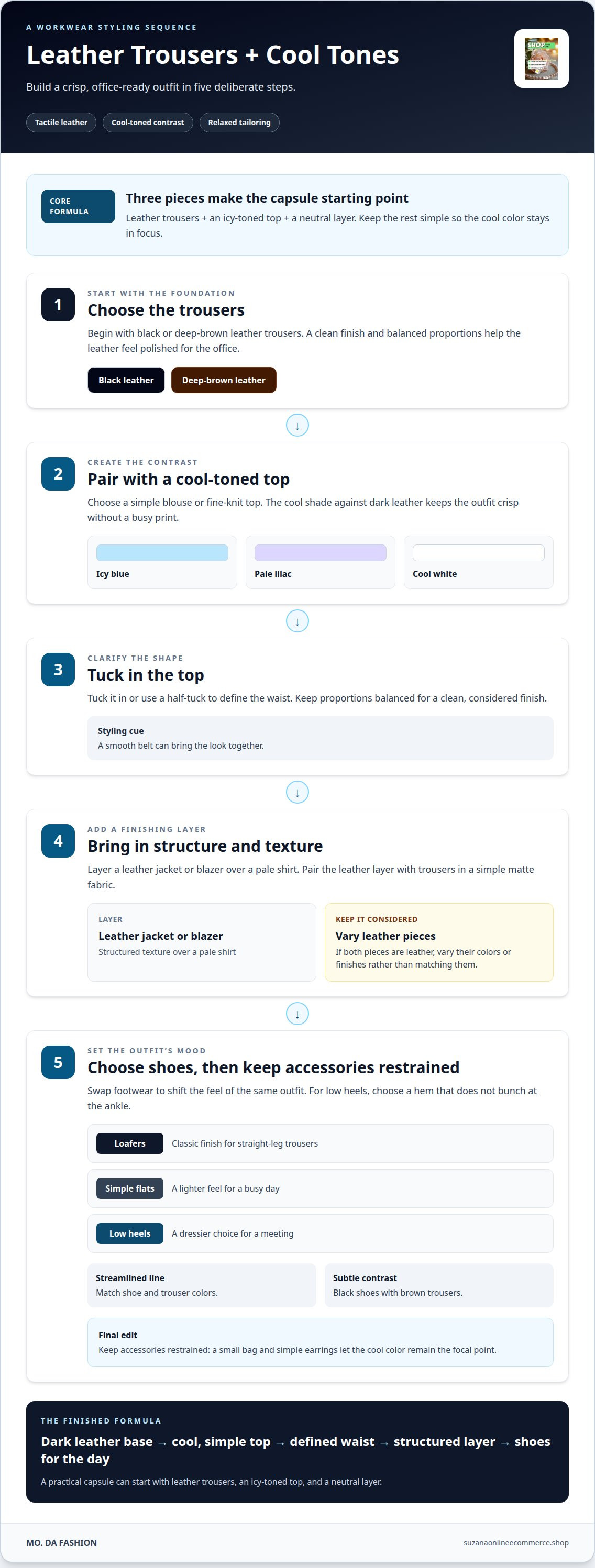
Pair black or deep-brown leather trousers with an icy-blue, pale-lilac, or cool-white top. The contrast keeps the outfit crisp without a busy print. Choose a simple blouse or fine-knit top and tuck it in, or half-tuck it, to define the waist. A clean finish and balanced proportions help leather look polished in the office.
Shoes shape the outfit’s mood. Leather loafers give straight-leg trousers a classic finish, while simple flats keep the look light for a busy day. For a dressier meeting, try low heels and a hem that doesn’t bunch at the ankle. Matching shoe and trouser colors creates a streamlined line; black shoes with brown trousers add subtle contrast.
A leather jacket or blazer can bring texture to an office outfit. Wear one structured leather layer over a pale shirt, with trousers in a simple matte fabric. If you wear leather for both pieces, vary the colors or finishes so the outfit looks considered rather than like a matching set. A smooth belt can bring the look together.
For a practical capsule, start with leather trousers, an icy-toned top, and a neutral layer. Change the shoes to shift the look: loafers for a classic workday, flats for an easier feel, or heels for a more formal appointment. Keep accessories restrained, such as a small bag and simple earrings, so the cool color remains the focal point.
These pairings bring together key 2026 workwear ideas: tactile leather, cool-toned color, and relaxed tailoring. If you want a softer alternative to trousers, a polished dress option can keep the same clean, office-ready mood. Choose a simple shape and add a structured layer to balance its movement.
3. Structured blazers styled over flowy dresses
A structured blazer gives a flowy dress a sharper outline. Try a navy blazer over a softly printed midi dress, leaving it open to show the dress’s shape. For a more defined waist, fasten one button and keep the rest simple. A clean shoulder line balances a skirt with plenty of movement.
Useful business-casual staples include a blazer, versatile trousers, a neat top, and a dress. Choose pieces that work in several combinations. Wear the blazer over a dress one day, then pair it with wide-leg trousers and a tucked-in shirt another day. A simple color palette makes it easier to mix and match.
Wide-leg trousers look balanced with a tailored blazer when the top is streamlined. Tuck in a fine-knit top or crisp shirt, then let the trousers create movement. A blazer that ends near the hip can clarify the proportions. For a coordinated outfit, choose related shades, such as charcoal and soft gray.
Tailored capris are a lighter option for warm weather. Pair them with a fitted blazer and simple top, keeping the hem neat and the overall shape intentional. Pushing up the blazer sleeves can make the outfit feel less formal while keeping it polished. On cooler days, add a light layer underneath.
Shift your seasonal styling with fabric weight and color. A flowy dress with a structured blazer works well between seasons; choose lighter shades for a fresh daytime look or deeper colors for a more formal impression. Keep accessories focused, such as a slim belt or small earrings, so the blazer remains the defining layer.
The guide says fitted, shrunken blazers prevailed in the 2010s and are no longer its recommended business-casual style; build looks with three capsule pieces plus other styling pieces.
4. Defining business casual
Business casual looks polished without feeling overly dressed up. Try this practical test: would your outfit stay comfortable through an eight-hour workday and suit a surprise meeting with a CEO? Think tailored trousers, a neat top, and a light layer rather than a formal matching suit or relaxed weekend clothes.
The right level of formality depends on your workplace. A cardigan over a tidy blouse may suit a relaxed office, while a structured jacket adds polish for a client-facing day. Consider the whole outfit, not just one piece: clean lines, appropriate coverage, and well-kept clothes make casual items feel intentional.
Sneakers show how workplace culture shapes the definition of business casual. They aren’t part of a traditional business-casual uniform, but may work in a more relaxed office. For a classic choice, try simple flats or loafers. A cardigan softens tailored trousers, while a blazer makes the same outfit feel more formal.
Use the occasion to guide your final choice. For a regular office day, combine comfortable separates with one sharper layer. For a presentation or meeting, choose a more structured outfit, such as trousers with a pressed shirt and blazer. If you’re unsure about a specific piece, compare it with the formality of your workplace’s usual outfits. The clearest takeaway: business casual is a polished, comfortable middle ground, adjusted to the people and setting around you. Build a polished outfit with the pieces that suit your workday.
Use that balance as a practical check, not a fixed dress code: your clothes should stay comfortable through an eight-hour workday and feel appropriate if a surprise meeting with a CEO comes up. If an outfit seems too formal for everyday tasks, reconsider the pieces while keeping the overall look neat and composed.
Footwear is another way to read the room. Sneakers aren’t part of a traditional business-casual uniform, though they may suit a more relaxed workplace. If office expectations are unclear, compare your choices with the usual level of polish around you. Aim to suit the setting without sacrificing comfort.
MO. DA FASHION
MO. DA FASHION is a natural next step for building polished workwear from everyday pieces. Browse dresses for an easy one-piece outfit, or pair pants with a top or T-shirt for a more mix-and-match look. A simple shirt can add a sharper finish for office days, interviews, or meetings. Choose combinations that suit your workplace and personal style, then use the outfit ideas above to guide your pairings. Contact MO. DA FASHION to explore pieces for your business-casual wardrobe.
Make Your Workwear Feel Like You
Create a personal outfit formula to make getting dressed easier. Start with the settings on your calendar, then choose a level of polish that feels right for each day. A reliable base, a comfortable layer, and one detail that reflects your style can make workwear feel intentional without being overplanned.
Think of business casual outfits for women in 2026 as a flexible starting point, not a strict uniform. Keep the pieces that feel comfortable and professional, then adjust the colors, layers, and proportions to suit your routine. Small changes can make a familiar outfit feel fresh, while a consistent approach keeps your wardrobe easier to wear.
Ready to explore pieces for your own workwear mix? Browse MO. DA FASHION’s styles and choose a look that feels like you. A little planning can make your next workday outfit feel simple, polished, and confident.
Frequently Asked Questions
What Does “Business Casual” Actually Mean for Women in 2026?
Business casual means looking professional in comfortable pieces that feel less formal than a suit. For a practical starting point, pair straight-leg trousers with a neat blouse and a simple layer. If your day includes a presentation, choose a more structured jacket; for desk work, a cardigan keeps the outfit relaxed while still looking composed.
Decoding Office Attire: What is Business Casual?
Business casual is a balance, not a fixed uniform. Judge the whole outfit by its neatness, coverage, and formality rather than labeling an item on its own. A plain T-shirt under a tailored jacket can look more office-ready than the same shirt with relaxed weekend pieces. For an unfamiliar workplace, start with a polished combination and adjust as you learn its norms.
What shoes can women wear with business casual outfits?
Flats, loafers, and modest heels are reliable choices for a traditional office. Minimal leather sneakers can suit a more relaxed workplace, especially when clean and simple. Avoid neon colors, oversized logos, and mesh running shoes for a polished setting. Consider the outfit’s shape, too: streamlined shoes pair neatly with wide-leg trousers, while a low heel can dress up a simple dress.
Where can women buy affordable business casual clothing in the United States, and what do items cost?
Women can shop at clothing retailers and online stores in the United States.


