
One dependable shirt can create more outfits than a closet full of pieces you wear only one way. Versatile button down shirts earn their place through easy combinations, not complicated styling. The challenge is making the same shirt feel polished for work and relaxed for weekend plans.
Start by choosing a fit and fabric that suit your routine, then change how you wear and layer the shirt. This guide covers practical outfit ideas for work, casual outings, and changing seasons, from a neat tuck with pants to an open layer over a top. Use the fit checks and outfit formulas to find a style that feels comfortable and works with clothes you already own.
Key Takeaways
- Versatile button down shirts work across more settings when you adjust the fit, styling, and layers.
- Try three straightforward outfit formulas: wear a shirt open over a top, tuck it into bottoms, or layer it under outerwear.
- Compare fit and fabric feel, along with comfort, movement, polish, and how easily the shirt layers.
- Adapt a look for work, weekends, or travel by changing the tuck, adding a layer, or choosing different accessories.
- Build around the clothes you already wear: note your regular settings, go-to pairings, and wardrobe gaps.
What makes button-down shirts versatile for everyday outfits?
A versatile button-down pairs easily with several wardrobe staples and can suit different settings through changes in styling and layers. The shirt stays the same; the outfit changes around it. Wear it open to add a relaxed layer, tuck it in for a neater line, or wear it beneath a jacket for a more polished look.
That flexibility depends on how the shirt works with pieces you already wear, not on a particular trend or dress code. Check how it sits when buttoned, whether the sleeves feel comfortable down or rolled, and how it pairs with your usual pants, skirts, or denim. An everyday shirt should let you move freely and feel comfortable in more than one outfit.
Button-down shirt or button-front shirt: what is the difference?
Button-down refers to the collar: its points fasten to the shirt with small buttons. Button-front describes the closure running down the front, and it doesn’t require a collar with fastened points. The terms aren’t interchangeable, although a shirt can be both button-front and button-down. For a helpful reference, see the description of a button-down dress shirt, including its collar style.
This distinction helps you describe the detail you mean. If the collar points attach to the shirt, it has a button-down collar. If you mean the row of buttons down the front, “button-front” is the clearer term.
Why one shirt can suit more than one setting
Small styling choices change a shirt’s overall impression. Leave the sleeves down and tuck it into pants for a tidy, work-ready look. Roll the sleeves and wear it untucked with denim for a relaxed feel. Add a jacket for a more polished layer, or wear the shirt open over a simple top for an easy casual outfit.
Skirts offer another option: tuck the shirt in to define the shape or leave it loose for a softer finish. Accessories can also shift the mood, from understated to more dressed up. Rather than building a separate wardrobe for every occasion, start with pieces you reach for often and see how a shirt can connect them. For more ideas on coordinating everyday tops, browse this essential wardrobe tops checklist.
That’s what makes versatile button down shirts useful: they pair with familiar pieces, allow comfortable movement, and adapt to different parts of the day.
How to style versatile button-down shirts with easy outfit formulas
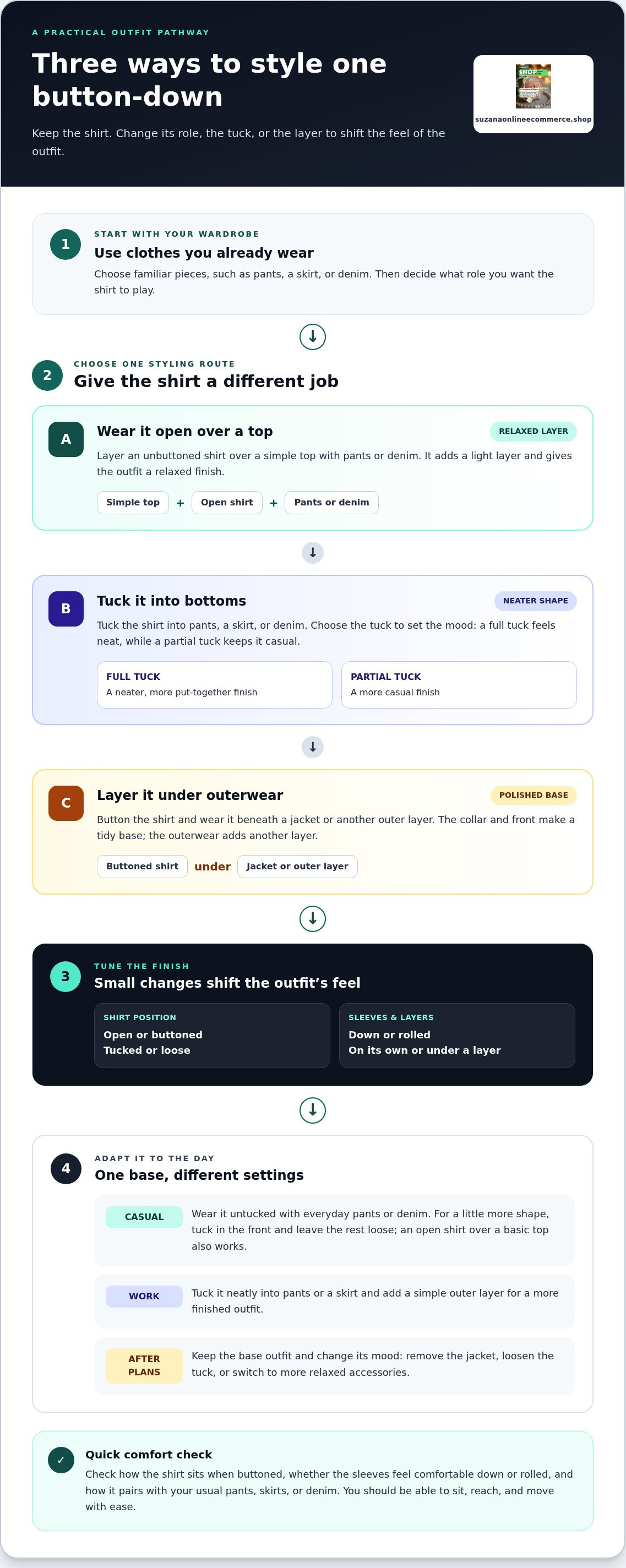
Start with clothes already in your closet, then change the shirt’s role to suit the day. These three formulas make versatile button down shirts easy to style without relying on a specific color, print, or trend:
- Open over a top: Layer an unbuttoned shirt over a simple top with pants or denim. It gives the outfit a relaxed finish and adds a light layer.
- Tucked with bottoms: Tuck the shirt into pants, a skirt, or denim for a more put-together shape. A full tuck feels neat, while a partial tuck keeps the outfit casual.
- Under outerwear: Button the shirt and wear it beneath a jacket or another outer layer. The collar and front create a tidy base, while the outerwear adds another layer.
A few choices can make the same shirt look noticeably different: wear it open or buttoned, tucked or loose, with sleeves down or rolled, and on its own or under a layer. A versatile white button-down shirt is one example of a style that can work in relaxed or polished combinations. For more casual outfit inspiration, explore these cute casual shirts for women style ideas.
A relaxed button-down outfit for casual days
For an easy daytime look, wear a button-down untucked with everyday pants or denim. For a little more shape, tuck in the front and leave the rest loose. You can also wear it open over a basic top and roll the sleeves for a laid-back finish. Choose a fit that feels comfortable, and use the formula with the colors and shirt styles you enjoy.
A polished button-down outfit for work and plans after
For a more finished outfit, tuck the shirt neatly into pants or a skirt and add a simple outer layer. Keep the outfit comfortable for the day, then make a quick transition for evening plans: remove the jacket, loosen the tuck, or switch to more relaxed accessories. The base outfit stays in place while a few small adjustments change its mood.
Build your own combinations by browsing the shirt selection and looking for a shirt that works with pieces you already wear.
How to compare button-down shirts by fit, fabric, and outfit potential
The right shirt should suit the outfits you actually wear, feel comfortable throughout the day, and work with your preferred layers. Choose a fit and fabric that suit the settings you dress for most, then check that the shirt feels comfortable in motion. A polished look matters, but you should also be able to sit, reach, and move with ease.
Use this comparison to clarify what you need. Fabric descriptions can vary, so read each shirt’s product details for composition and care rather than assuming how it will feel.
| What to compare | What to look for | Outfit potential |
|---|---|---|
| Fit | A relaxed shape gives extra room; a neater silhouette sits closer to the body. | Consider whether you’ll wear it loose, tucked, or under another layer. |
| Fabric feel | Look for the weight and feel described in the product details, along with care guidance. | Choose a feel that suits your comfort preferences and regular settings. |
| Layering | Think about how the shirt will sit over a top or beneath a jacket. | A comfortable layer should let you move without feeling bulky or restrictive. |
| Occasions | List the places you plan to wear it, such as work, casual plans, or travel. | Prioritize a shirt that coordinates with several pieces you already own. |
Choose a fit that works tucked, untucked, and layered
Start with the shoulders: the seams should sit comfortably and shouldn’t pull when you move. Check the sleeve length and room through the body, too. A roomier shirt can feel casual and layer easily, while a closer, neater shape may create a more streamlined look. Before deciding, picture it untucked with pants, tucked into a skirt, and beneath a jacket. If one of those combinations feels awkward, the shirt may not suit the way you want to wear it.
Compare fabrics for comfort and the way they wear
Fabric weight and feel can affect comfort in different settings and how easily a shirt layers. Read the product description for fabric composition and care instructions, then consider whether those details fit your routine. For warm-weather outfit ideas, see this breathable summer shirts guide.
When comparing versatile button down shirts, consider the whole picture: fit, feel, movement, and the outfits you’ll build around the shirt. A shirt that looks polished but feels uncomfortable may spend more time in the closet than in your regular rotation.
How to adapt button-down shirts for work, weekends, and changing seasons
Keep a dependable base outfit and adjust a few details to match your plans or the weather. This sequence makes versatile button down shirts easier to wear throughout the week:
- Choose the base: Start with a shirt and bottoms that feel comfortable for the day.
- Adjust the tuck: Tuck it in for a neater finish, or leave it untucked for a more relaxed feel.
- Add a layer: Wear the shirt alone, open over a top, or beneath a jacket as needed.
- Finish with accessories: Keep details simple for everyday plans, or add a more polished touch when it suits the occasion.
For work, a tidy tuck and a light layer can create a composed outfit without relying on rigid dress-code rules. For weekends, loosen the styling and choose layers and accessories you already reach for. For travel, build around comfortable pieces that you can adjust as your plans and surroundings change.
From weekday plans to a relaxed weekend look
You don’t need to change your whole outfit. Start with the shirt tucked in and sleeves down, then loosen the tuck or roll the sleeves when the day becomes more casual. You can also remove or swap a layer and choose simpler accessories. Use pants, denim, or other bottoms already in your wardrobe to keep the transition easy and personal.
Layer a button-down through changing weather
Wear the shirt on its own when comfortable, open over a simple top as an extra layer, or beneath a jacket when you want more coverage. Each option changes the outfit’s warmth and visual balance, so consider your plans and how much layering feels comfortable. A basic T-shirt can make a simple base; find more ideas in this everyday basic T-shirt styling guide.
Small adjustments keep a familiar outfit useful as your plans or the weather change. Browse shirts for your everyday outfits and find options to add to your work-to-weekend rotation.
How to build a small wardrobe around versatile button-down shirts
A small wardrobe works best when its pieces connect. Before choosing another shirt, look at the clothes you already wear and the settings your outfits need to cover. This helps you spot a genuine gap and choose a shirt that can work with more than one outfit.
Create a quick button-down outfit plan
Write down three regular settings, such as work, casual plans, and travel. For each one, sketch an outfit using pieces you already own. Keep the combinations simple:
- Work: Pair a shirt with your usual pants or skirt, then note whether you’d tuck it in or add a layer.
- Casual plans: Try it with denim or other everyday bottoms, worn loose or open over a top.
- Travel: Build around comfortable clothes you can wear together, and consider whether the shirt can be layered as plans change.
Now compare your outfit notes. Do you prefer a relaxed shape or a neater one? Which colors would work with the most items you own? Would you wear the shirt tucked, untucked, or layered? Your answers clarify what to look for and help identify wardrobe gaps before you shop.
Find a shirt that fits your everyday plans
Use your outfit plan as a practical checklist. Consider whether the fit feels comfortable when you move and works with the layers you expect to wear. Read the fabric description for its feel and composition, and check the care details against your routine. Most of all, consider how many outfits you can make with clothes already in your closet.
A useful selection rule: Start with the outfits you want to wear, then choose a shirt whose fit, fabric feel, and care details suit those plans. That’s how versatile button down shirts become a useful part of a small wardrobe instead of a one-outfit purchase.
Ready to put your outfit plan into practice? Browse the shirt selection, compare the options with your list, and choose a shirt that fits your everyday plans.
Make Your Button-Down Work Harder
The best versatile button down shirts fit naturally into your routine. Look for a comfortable fit and fabric feel, then consider how the shirt works with pieces already in your closet. A tuck, an open layer, or a simple change of accessories can shift the look for work, weekends, and changing weather.
Start by listing where you want to wear a button-down and sketching an outfit for each setting. This quick check makes your next choice more purposeful and helps you build more looks from fewer pieces.
MO. DA FASHION offers shirts as part of its ready-to-wear apparel range through its online store. Browse shirts at MO. DA FASHION and choose an option to style with your everyday outfits.
Frequently Asked Questions
What makes a button-down shirt versatile?
A button-down shirt is versatile when it works with several pieces in your wardrobe and suits more than one setting. Wear it tucked into pants for a neat look, loose with denim for a casual outfit, or open over a top as a layer. Fit, sleeve styling, and accessories all change the feel. Versatile button down shirts make outfit planning easier because one shirt can serve different everyday needs.
How do you style a button-down shirt casually?
For a casual outfit, wear the shirt untucked with denim or everyday pants, or leave it open over a simple top. Rolling the sleeves or using a partial tuck adds a relaxed finish without making the look feel overly styled. Build around colors and pieces you already enjoy wearing. The easiest casual combination is one that feels comfortable and suits your plans, whether you’re meeting friends or running errands.
Can you wear a button-down shirt with jeans?
Yes, a button-down shirt pairs easily with jeans. Wear it untucked for a laid-back look, tuck in the front for a little shape, or button it and add a simple layer. The overall feel depends on the shirt’s fit and how you style the rest of the outfit. Try the combination with your favorite denim and adjust the sleeves or tuck until you’re comfortable and the proportions feel balanced.
How do you wear a button-down shirt to work?
For work, pair a button-down with pants or a skirt and tuck it in for a tidy finish. Add a jacket or another simple layer if it suits your plans and personal style. Comfort still matters, so choose a fit that lets you move easily through the day. To make the outfit feel more relaxed afterward, remove the layer, loosen the tuck, or change a few accessories rather than replacing the whole look.
What is the difference between a button-down and a button-up shirt?
A button-down shirt has collar points fastened to the shirt with buttons. Button-up usually describes a shirt that closes with buttons down the front, regardless of collar style. The terms can overlap: a shirt can have both a button-front closure and a button-down collar. If you’re describing the collar detail, “button-down” is specific. If you mean the front closure, “button-up” is commonly understood.
How should a button-down shirt fit?
A button-down should feel comfortable at the shoulders, sleeves, and body without pulling when you move. The shoulders should sit naturally, and the sleeves should feel right whether worn down or rolled. Consider how you’ll style it, too: a roomier fit can feel relaxed or work well over a top, while a closer fit may tuck neatly beneath a layer. Imagine it tucked, untucked, and layered before choosing.
Can you wear a button-down shirt in different seasons?
Yes, you can adapt a button-down through the year by changing how you layer it. Wear it on its own when comfortable, open over a top as an extra layer, or beneath a jacket when you want more coverage. Fabric feel and weight can affect comfort, so review the product description and care details as you choose. For warmer weather, keep the outfit simple and select layers that feel comfortable for the day.


