

The lightest-looking shirt isn’t always the coolest one. A thin fabric can still feel clingy after hours in the heat, while a shirt with a little more structure may let air move comfortably. With breathable summer shirts, the fiber name is only part of the story.
Choosing a shirt for a hot day can feel confusing. Linen, cotton, blends, and different fabric weights all sound promising, but the weave and fit matter too. You want a shirt that feels easy through a commute, a busy afternoon, or a relaxed evening, not just one that looks airy on the hanger.
This guide explains what affects breathability, from how fibers handle moisture to how fabric construction influences airflow. Compare familiar summer materials, learn how fit can change the feel, and use straightforward care tips to keep shirts comfortable. By the end, you’ll have a practical way to compare shirts with your climate and daily plans in mind.
Key Takeaways
- Choose breathable summer shirts by considering the whole garment, not just the fiber name on the label.
- Compare cotton, linen, and other common fabrics by feel, care needs, and how you plan to wear the shirt.
- Match your choice to your day, including humidity, time outdoors, movement, and indoor settings.
- Use fabric details, construction, fit, and care instructions together to find shirts that suit your routine.
What Makes Breathable Summer Shirts Feel More Comfortable?
Breathability describes how readily air moves through clothing and moisture escapes, which can affect comfort during wear. That’s the starting point for choosing breathable summer shirts, but comfort depends on more than the fiber listed on the label. Fabric construction, weave, thickness, fit, and what you’re doing all play a part.
Think of fabric as a finished structure, not just a material. Fibers are made into yarn, then yarn is formed into fabric through Textile manufacturing. Those steps affect a shirt’s feel and construction. Even two shirts made from the same fiber can feel different if their yarns, thickness, or weave differ.
How does breathability affect everyday comfort?
Airflow can help reduce the stuffy feeling that builds up under clothing, while moisture handling affects whether fabric feels clammy or dry against your skin. You may notice the difference during a warm commute, while running errands, or over an outdoor lunch. Fit and activity matter too: a close-fitting shirt may feel different during a brisk walk than a relaxed one.
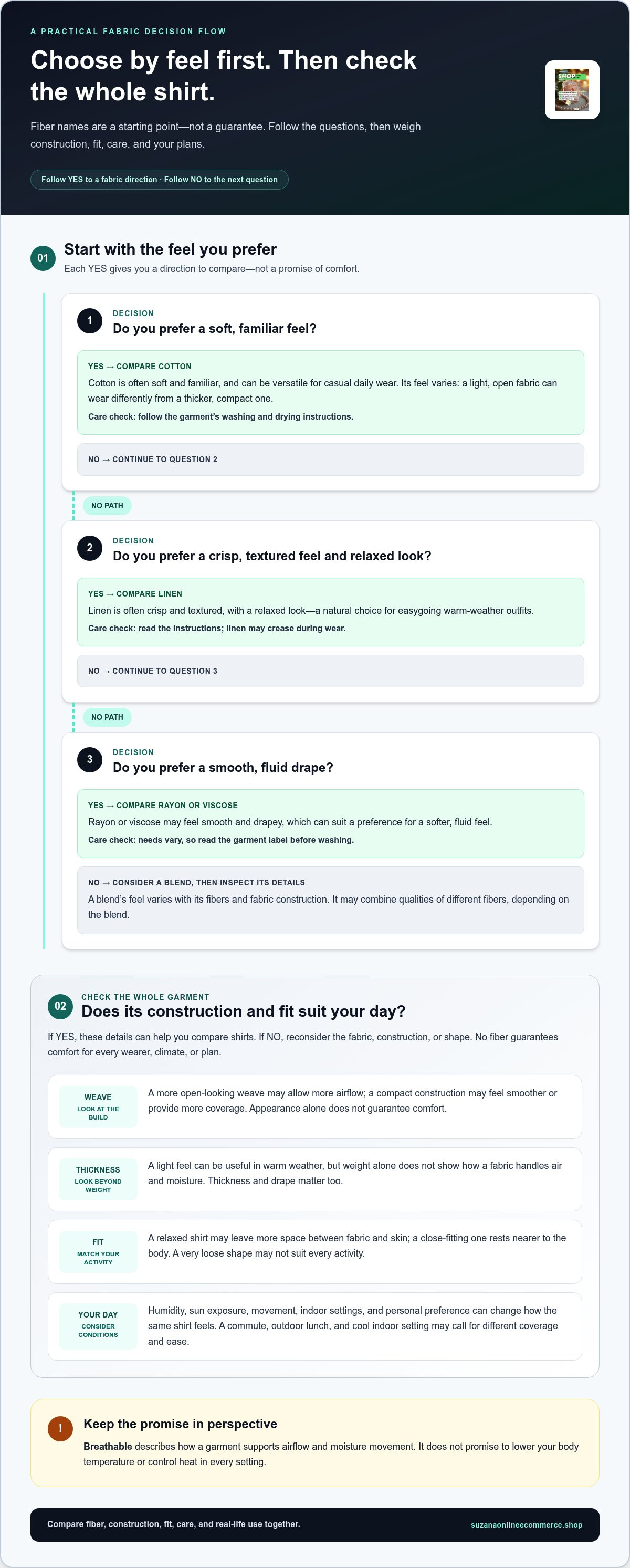
Breathable doesn’t automatically mean cooling. The word describes how a garment supports airflow and moisture movement, not a promise that it will lower your body temperature or control heat in every setting. Humidity, sun exposure, movement, and personal comfort can all change how the same shirt feels.
Why fabric labels do not tell the whole story
A fiber label tells you what a material is made from, but not exactly how the fabric is built. Weave, thickness, yarn, and garment shape also affect airflow and how much fabric rests against your skin. No fiber guarantees comfort for every wearer, climate, or plan.
- Weave: The way yarns cross to form fabric. A more open construction may allow more airflow than a compact one.
- Thickness: A light feel can be useful in warm weather, but weight alone doesn’t reveal how the fabric handles air and moisture.
- Fit: Room to move can keep fabric from sitting closely against the body, while a very loose shape may not suit every activity.
Use these details together. A breathable shirt is the result of fabric, construction, fit, and real-life use working as a whole, not a single label promising an easy day in the heat.
How Fabric, Weave, and Fit Shape Breathable Summer Shirts
Comfort comes from the way a shirt is made and worn, not just the name of its fiber. Fiber and yarn, fabric thickness and weave, garment fit, activity, and weather work together to shape how a shirt feels. Use these details to compare breathable summer shirts without assuming that two garments with similar labels will wear alike.
Which fabric details should shoppers notice?
Cotton, linen, and rayon or viscose are common in warm-weather clothing, but each can feel different depending on its construction. Cotton can range from light and airy to dense; linen often has a crisp, textured feel; rayon or viscose may feel smooth and fluid. These are general tendencies, not guarantees. A Georgia Institute of Technology article featuring an expert in fibers, polymers, and textiles discusses moisture management in linen and cotton.
Start with the listed fiber content to understand what the fabric is made from, then check the care instructions. Blends combine fibers, but their proportions, yarn, and finished construction all affect the result. A material name alone can’t tell you exactly how a shirt will feel against your skin or after a full day of wear.
How do weave and fit change the feel?
Weave is the way yarns cross to form fabric. A more open-looking weave may allow more airflow, while a compact construction may feel smoother or provide more coverage. Neither appearance alone guarantees comfort: thickness and the way fabric drapes matter too. A relaxed shirt may leave more space between fabric and skin, while a close-fitting one rests nearer to the body.
Match those details to your plans. A breezy outdoor lunch, an active commute, and a cool indoor setting can call for different levels of coverage and ease. Humidity, movement, personal preference, and the shirt’s overall shape all influence comfort. Use the product description to compare the details provided, then consider the whole garment rather than relying on a single label.
For an easy next step, browse shirts for everyday wear and compare the available garment details with your usual summer plans.
Breathable Summer Shirt Fabrics Compared: Cotton, Linen, and More
Fabric names offer a useful starting point, but they don’t guarantee how a shirt will feel. Use this comparison to narrow your options, then check the garment’s construction and care label. The best choice depends on your comfort needs and care preferences.
| Fiber | Common feel | Care considerations | Everyday use |
|---|---|---|---|
| Cotton | Often soft and familiar; feel varies with the fabric. | Follow the garment’s care label, especially for washing and drying. | A versatile option for casual daily wear. |
| Linen | Often crisp and textured, with a relaxed look. | Check care instructions; the fabric may crease during wear. | A natural choice for easygoing warm-weather outfits. |
| Rayon or viscose | Can feel smooth and drapey. | Care needs vary, so read the label before washing. | Useful when you prefer a softer, fluid feel. |
| Blends | Varies according to the fibers and fabric construction. | Use the care instructions for the finished garment. | Can combine qualities of different fibers, depending on the blend. |
Cotton and linen shirts: what should you expect?
Cotton can feel soft and comfortable, but a light, open fabric may wear differently from a thicker, compact one. Linen is often associated with a crisp feel and a naturally relaxed appearance. Its texture and tendency to crease may suit some people and settings better than others. Neither fiber guarantees a particular level of comfort. Weave, fabric weight, and how the shirt is made all shape the experience.
Care can differ between garments, even when they share a fiber name. Check the individual care label before washing or drying, and follow its directions to look after the shirt. Don’t assume that instructions for one cotton or linen shirt apply to another.
What about rayon, viscose, and blended fabrics?
Rayon and viscose are names you may see on clothing labels. They’re often associated with a smooth, flowing feel, but the finished fabric can vary. Blends combine fibers, yet the percentages alone don’t tell the whole story: yarn, weave, thickness, and garment shape also matter. When comparing breathable summer shirts, consider the full garment description and care instructions instead of choosing by fiber name alone.
Use the comparison as a guide, not a ranking. A shirt that suits a warm, casual afternoon may not be your preference for a long day of movement. Let the feel you like and the care routine you’re comfortable with guide your choice.
How to Choose and Care for Breathable Summer Shirts
A simple plan makes it easier to choose breathable summer shirts for your routine. Start with what you’ll be doing, then compare fabric details, construction, fit, and care instructions. This keeps the focus on the shirt you’ll actually wear, not just the words on its label.
- Think about use: Consider commuting, travel, work, errands, or time outdoors.
- Check the fabric: Read the listed fiber content and consider the feel you prefer.
- Look at construction: Notice fabric thickness and how open or compact it appears.
- Consider fit: Choose a shape that feels comfortable and allows the movement you need.
- Review care: Check the garment’s instructions before deciding how you’ll wash and maintain it.
Match a shirt to your plans and personal preferences
For relaxed everyday plans, you might favor a soft-feeling shirt that’s easy to move in. Travel or work may call for a look and level of coverage that suit your setting, while outdoor time can make airflow and freedom of movement priorities. Humidity and time in the sun can also affect comfort, but people experience heat differently. Choose based on your own preferences, not a promise that one fabric or fit will feel right for everyone.
Planning a coordinated closet? Explore these essential wardrobe tops for ideas on building outfits around useful staples.
Keep summer shirts comfortable with label-led care
Care needs vary with fiber, blends, fabric construction, and garment details. Use the shirt’s care label for washing, drying, and ironing guidance rather than applying one routine to every item. Follow those directions to care for the garment as intended, and check them before trying a new washing method. A label is more useful than assumptions based on a familiar fabric name.
For simple outfit inspiration, see these ideas for styling everyday basic T-shirts. Then browse shirts for summer and compare the available garment details with your plans, preferred feel, and care routine.
Find Breathable Summer Shirts That Fit Your Everyday Style
The most useful summer shirt is one that feels comfortable for your plans and fits naturally into your wardrobe. Judge the whole garment, not just a material name. Fiber content, construction, fit, intended use, and care all help you decide whether a shirt suits your everyday routine.
A quick checklist before choosing a summer shirt
- Read the label: Check the listed fiber content and care instructions.
- Look at the construction: Consider the fabric’s thickness and weave, not just its name.
- Think about fit: Choose a shape that feels comfortable and gives you the ease of movement you want.
- Picture your plans: Consider whether you’ll be commuting, spending time outdoors, or moving between warm and cool indoor spaces.
- Balance your priorities: Weigh the feel, appearance, and care routine you prefer for regular wear.
No single fiber or fit works for everyone. The best choice is the shirt that feels right to you, suits the setting, and fits the way you like to get dressed. These small checks make it easier to compare breathable summer shirts with confidence, without relying on a label alone.
Build easy outfits around breathable shirt styles
Keep styling simple. Pair a shirt with pants for an easy everyday outfit, or wear a top with a jacket when you want an extra layer for an indoor setting. A T-shirt can also work as a relaxed base with familiar wardrobe pieces. Let the shirt’s shape and overall feel guide the rest of the outfit.
For more outfit ideas, explore cute casual shirts for women. MO. DA FASHION offers shirts, tops, and T-shirts to browse online. Take a look through the online store and explore clothing for your everyday style.
Choose a Shirt That Feels Right for Your Summer
Comfort comes from the whole garment. Fiber content is a helpful starting point, but weave, thickness, and fit also shape how a shirt feels. Your plans matter too, from a warm commute to a relaxed afternoon, so consider the weather, movement, and coverage you prefer.
As you compare breathable summer shirts, check the fabric details and care label together. A shirt that suits your everyday style and care routine is more likely to become a regular part of your wardrobe. There’s no single best choice for everyone; the right one balances comfort, appearance, and practical upkeep for you.
MO. DA FASHION offers shirts, tops, and T-shirts online. Browse the clothing, save your favorites to your wishlist, and use the cart when you’re ready. Explore the online store to find a summer shirt that suits your style.
Frequently Asked Questions
What fabric is most breathable for summer shirts?
There’s no single best fabric for everyone. Cotton, linen, and rayon or viscose are common summer-shirt options, but the finished shirt’s weave, thickness, fit, and construction also shape how it feels. Check the listed fiber content and care instructions, then consider your climate, activities, and personal preferences. Treat general fabric descriptions as a helpful starting point, not a guarantee of comfort.
Are cotton shirts breathable in hot weather?
Cotton shirts can feel comfortable in warm weather, but the experience varies from garment to garment. Fabric weight, weave, fit, and construction all play a part. A dense, close-fitting shirt may feel different from a lighter, more relaxed one. Before choosing, check the item’s fiber content and care instructions, and think about what you’ll be doing. A cotton label alone can’t guarantee how a shirt will feel.
Is linen cooler than cotton for summer shirts?
Linen is often chosen for warm-weather clothing, while cotton is another familiar option. Neither is automatically more comfortable in every shirt. Fabric construction, weight, fit, and personal preference can change how each garment feels. Compare the shirts themselves and read their care labels. If you have a preferred fabric feel or want a care routine that suits your habits, weigh those priorities along with the fiber name.
How can I tell if a shirt is breathable when shopping online?
Start with the listed fiber content, then look for any available fabric or construction details. Review the product description and care information, and consider the fit and how you plan to wear the shirt. Online descriptions can help you compare breathable summer shirts, but they can’t fully reproduce the fabric’s feel. Don’t treat one word or fiber name as proof that a garment will feel comfortable to you.
Can a loose-fitting shirt feel more comfortable in summer?
A looser fit may feel less close against the body and offer more ease of movement, but comfort is personal. Fabric, weave, garment shape, weather, and activity all influence the way a shirt feels. Check the listed fit details and compare them with your preferences. Consider whether you’d feel more at ease in a relaxed everyday shape or a closer silhouette for your usual plans.
How should I wash breathable summer shirts?
Follow the care label on each shirt, since washing, drying, and ironing instructions can differ by fiber, blend, and construction. Don’t assume every cotton, linen, or rayon garment needs the same routine. Check the label before cleaning or pressing the shirt, and follow its specific directions. This simple habit helps you care for each garment appropriately instead of relying on a general rule for a whole fabric type.
Are blended fabrics a good choice for summer shirts?
Blended fabrics can be a good choice, but the result depends on the specific fibers and how the fabric is made. The word “blend” alone doesn’t tell you how breathable or comfortable a shirt will feel. Check the listed fiber content, any construction details, and the care instructions. Then consider your intended use and personal preferences to decide whether that particular garment suits your summer wardrobe.


