
What if the most polished work outfit isn’t the most formal one? Choosing modern business casual suits can feel tricky when workplace expectations vary. A matching set may look strictly formal, while a more relaxed combination can feel too casual. The sweet spot is an outfit that suits your office and works for more than one occasion.
Business casual can mean different things from one workplace to another, but the goal is usually to look professional without feeling overdressed. This guide compares suit styles, fit, and outfit flexibility to help you make a considered choice. You’ll find practical ways to assess a silhouette, choose between a coordinated suit and separates, and think about how shirts and pants can expand your outfit options.
Key Takeaways
- Start with your workplace’s dress expectations and the occasions you need the outfit for.
- Compare silhouette and structure to balance a polished look with a relaxed feel.
- Weigh coordinated suit sets against separates for ease of styling and flexibility.
- Decide on your preferred fit and structure before narrowing down colour.
- Consider how shirts and pants could help you create more outfits from the pieces you choose.
What Makes Modern Business Casual Suits Right for Today’s Workplace?
A business casual suit combines the structure of tailoring with a more relaxed feel. It can look polished without relying on every detail of conventional formalwear, making it an option for workdays that call for professionalism but not a strictly formal uniform.
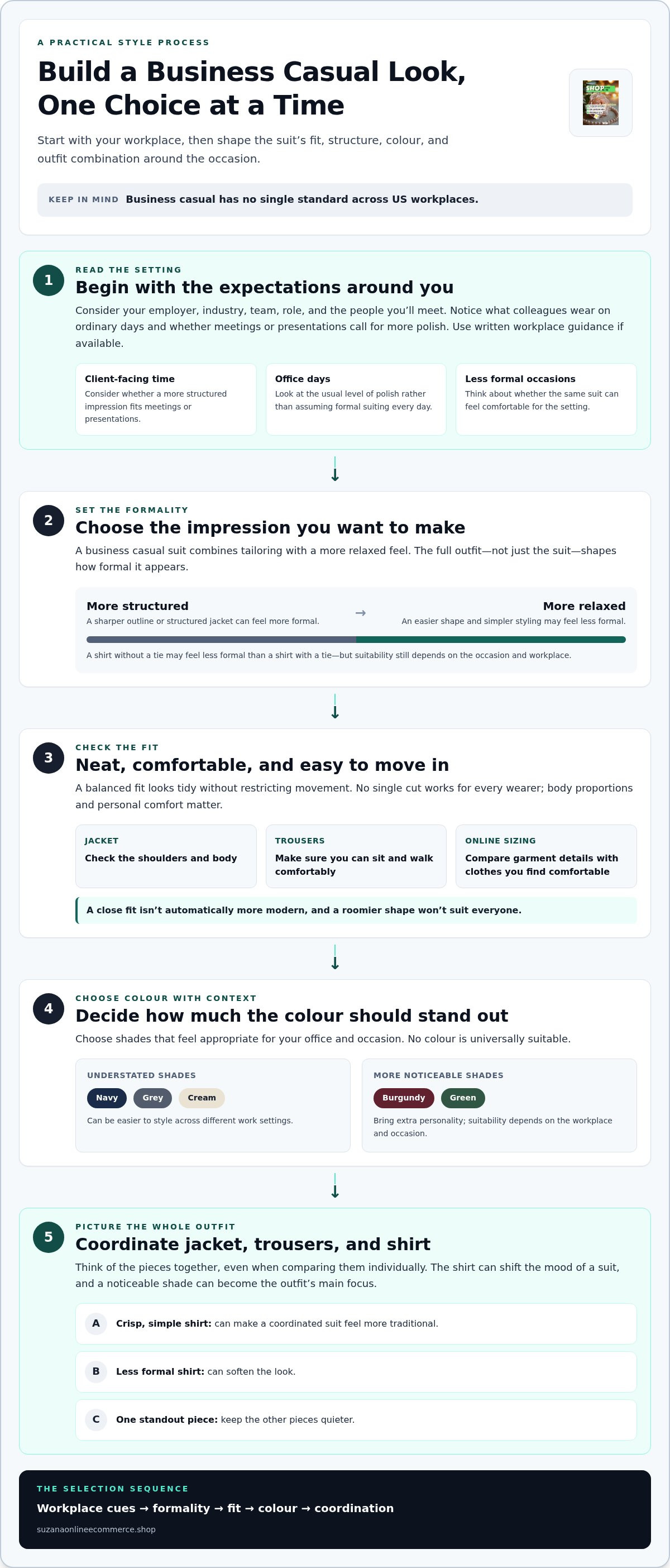
There’s no single standard across US workplaces. Expectations can vary by employer, industry, team, and occasion. A client presentation, an ordinary office day, and a company celebration may each call for a different level of formality. The overview of Business Casual Definition and History offers wider context on how the dress code has developed and why interpretations differ.
Use these examples as a starting point, then consider the norms where you work and the impression you want your outfit to make. Modern business casual suits can be styled with more or less formality, so the full outfit matters as much as the suit itself.
How Does a Business Casual Suit Differ from a Formal Suit?
A formal suit creates a conventionally dressed-up impression, often through a coordinated look and traditional styling. A business casual suit aims for a polished, adaptable feel. The difference isn’t always a specific garment feature: your shirt, whether you wear a tie, and how you style the jacket and trousers all affect the overall impression. Neither approach is right for every office or event.
For example, wearing a suit with a shirt but no tie may feel less formal than adding a tie. That doesn’t make it suitable everywhere. Consider the occasion and how colleagues or clients typically dress before deciding how relaxed to make the look.
Which Workplaces Suit a More Relaxed Suit?
A more relaxed suit may fit an office where polished separates are common. Client-facing meetings can call for a more structured impression, while less formal settings may allow an easier look. These are comparisons, not universal rules. Industry, role, employer, and the people you’ll meet all influence what feels appropriate.
Look for everyday cues before choosing. Notice what people wear during regular office hours and whether meetings or presentations bring a more formal dress level. If your workplace has written guidance, use it alongside those observations. Personal preference matters, but let the setting guide your decision.
It can help to think about your week in concrete terms:
- Client-facing time: Consider whether a more structured outfit fits the expectations for meetings or presentations.
- Office days: Look at the usual level of polish around you rather than assuming every day requires formal suiting.
- Less formal occasions: Decide whether you can style the same suit in a way that feels comfortable for the setting.
When expectations are unclear, choose an outfit that feels polished without seeming out of place. A suit can be a flexible starting point, but its effect depends on the workplace and how you style it. The next sections will help you compare details and outfit structures against your workday.
Which Suit Details Shape a Modern Business Casual Look?
A suit’s impression comes from its silhouette, structure, colour, and the way its pieces work together. A sharper outline and more structured jacket can feel formal, while an easier shape and simpler styling may read as more relaxed. Think about the setting, then assess each detail as part of the full outfit.
Fit and workplace context help determine whether a suit feels polished, relaxed, or too formal for the occasion. Keep that in mind as you browse modern business casual suits. The same jacket can create a different impression with a different shirt or styling choice.
How Should a Business Casual Suit Fit?
A balanced fit looks neat without restricting movement. Check how the jacket sits across your shoulders and body, and whether the trousers let you sit and walk comfortably. A close fit isn’t automatically more modern, and a roomier shape won’t suit everyone. Body proportions and personal comfort matter, so no single cut works for every wearer.
When shopping online, review the size information provided for each garment and compare it with measurements from clothes you already find comfortable. Use those details to guide your choice, while remembering that fit preferences vary.
Which Colours and Outfit Pieces Feel Most Versatile?
Understated shades such as navy, grey, or cream can be easier to style across different work settings. More noticeable colours, such as burgundy or green, bring extra personality, but their suitability depends on your workplace and the occasion. Choose shades that feel appropriate for your office rather than treating any colour as universally suitable.
Your shirt also changes the mood. A crisp, simple shirt can make a coordinated suit feel more traditional; a less formal shirt may soften the look. MO. DA FASHION offers shirts and tops to consider as you plan an outfit.
Think of the jacket, trousers, and shirt as one outfit, even when comparing them individually. A defined jacket may feel more formal with a similarly polished shirt. A simpler shirt can make the combination feel more relaxed, while a noticeable shade can become the outfit’s main focus. If one piece stands out, keep the others quieter.
- Silhouette: Compare the overall shape, not just whether the fit is close or relaxed.
- Structure: Notice how formal the jacket feels and whether that suits the occasion.
- Colour: Choose understated or expressive shades based on your workplace context.
- Coordination: Picture the jacket, trousers, and shirt together before deciding.
As you narrow down your preferences, browse suit options with your chosen fit, structure, and colour in mind. Picturing the full outfit makes it easier to compare options for your workday.
Suit Set or Separates: Which Business Casual Option Works Better?
Choosing between a coordinated suit and separates comes down to how you like to get dressed, how often you’ll wear each piece, and how much flexibility you want. A coordinated set gives you a ready-made overall look. Separates let you mix a jacket with different pants, but take more thought to look intentional.
Use this comparison to weigh the trade-offs for your workweek and other occasions. Neither option is automatically more business casual. Styling and workplace expectations still shape the result.
| Decision point | Coordinated suit set | Separately selected pieces |
|---|---|---|
| Coordination | Designed to create a consistent overall look with fewer pairing decisions. | Requires thought about colour, shape, and how the jacket and trousers look together. |
| Repeat wear | Can be worn together for a unified outfit, or considered piece by piece if each works with other clothes. | Each item can be worn with different wardrobe staples, depending on how well it coordinates. |
| Flexibility | A straightforward choice for work occasions that call for a polished, matching appearance. | Can offer more ways to vary an outfit across work and less formal occasions. |
When Is a Coordinated Suit Set the Simpler Choice?
A coordinated set can suit you if you want a consistent look without spending time testing jacket-and-trouser combinations. It’s a straightforward starting point for a work outfit, especially if you prefer pieces that look like they belong together. Consider how often you’ll wear the full look and whether you could also wear either piece on its own.
Fewer styling decisions can be useful on busy mornings. A coordinated outfit doesn’t have to feel strictly formal, since your shirt and other styling choices influence its mood. Check which pieces are included in the set, then picture how you’d wear it for the occasions on your calendar. Don’t assume every suit listing includes the same components.
When Can Separates Add More Outfit Flexibility?
Separates can work well if you already have wardrobe staples to wear with a jacket or pants. A jacket might pair with other pants, while suit pants may work with a different top. MO. DA FASHION also offers pants to consider when building outfits around separate pieces.
Separate pieces don’t need to match exactly, but they should look chosen on purpose. Compare their colour, overall formality, and shape. A strong contrast can feel more relaxed, while similar tones may create a quieter, more coordinated effect. Keep the occasion in mind, too. A combination that works for an office day may give a different impression at a client meeting or event.
If flexibility is your priority, consider how many outfits you can make with each piece. If you’d rather have a dependable, unified starting point, a coordinated suit may be simpler. Either way, choose the structure that fits your routine, then build the outfit around it. These criteria make comparing modern business casual suits easier without assuming one option works for everyone.
How to Choose Modern Business Casual Suits for Your Workday
Make your choice easier by following a simple order: start with where you’ll wear the suit, decide how structured you want it to feel, then compare fit and outfit flexibility. This keeps an appealing colour or styling detail from distracting you from the practical question: will the look suit your workday?
Start with Your Office and Occasion
Think about everyday office wear separately from presentations, interviews, and work-related events. Colleagues’ typical attire can help you gauge ordinary days, but it may not reflect expectations for a client meeting or special event. Use your workplace’s guidance and norms to set the formality level before comparing options.
Use this checklist in order:
- Define the setting. Note where you’ll wear the suit most: a regular office day, a client-facing meeting, an interview, or a work event. If you need it for several situations, keep each one in mind as you compare.
- Choose your preferred structure. Decide whether you want a more formal, defined look or a more relaxed feel. Make this decision before considering colour or shirt combinations, so your shortlist reflects the level of polish your workplace calls for.
- Review the size information. For ready-to-wear options online, read the size details provided with the garment and compare them with measurements you’re familiar with. Fit preferences vary, so use product information as a selection guide.
- Consider your wardrobe. Think about the shirts and pants you already wear. Could they work with the suit pieces you’re considering? If you’re looking at separates, picture each piece with more than one item you own.
- Check versatility. Imagine wearing the outfit for your main work occasion and a less formal setting. Consider whether the pieces will be useful beyond one specific event while still fitting your workplace’s expectations.
Check Fit Information and Wardrobe Compatibility
When shopping online, take time to review the size details for each garment instead of relying on a general size label alone. Consider how you prefer clothes to sit and move through a typical day. Your existing shirts and pants can also help you decide whether a suit will work with your wardrobe.
Workplace setting, fit preference, and versatility are practical criteria for choosing a suit that feels right for your workday. Once you’ve considered them, browse the suit selection with your priorities in mind. Compare options against your usual work occasions and the clothes you already wear.
Shop for a Business Casual Suit with a Clear Plan
A focused shortlist makes online shopping easier. Start with the workplace and occasions you’re dressing for, then narrow your choices by preferred fit, outfit structure, and how often you expect to wear the pieces. This keeps your decision tied to your routine rather than a single detail, such as colour, that may matter less day to day.
A Quick Checklist Before You Choose
Before selecting an option, use this checklist to connect your workplace needs with what you’ll wear:
- Confirm the setting. Think about your usual workday and any presentations, meetings, or events that call for a different level of polish. Your employer’s expectations are the best guide.
- Review fit and size information. Read the size details shown for each garment and consider how you prefer clothes to sit and move. Use the information to guide your choice, keeping in mind that fit preferences differ.
- Choose your outfit structure. Decide whether you’d rather have a coordinated suit look or select a jacket and pants separately. Consider which approach feels easier to style with the clothes already in your wardrobe.
- Think about repeat wear. Picture the pieces in more than one setting. A versatile choice should work for your workday and feel useful for other occasions that suit its style.
Keep the order simple: workplace first, fit preference next, then outfit structure and versatility. You’ll have a clearer basis for comparing modern business casual suits and less temptation to choose on appearance alone.
Browse Suits and Build a Versatile Wardrobe
Once you’ve set your criteria, browse the suits and compare the product details for each option. Consider whether the pieces match your preferred structure and whether the overall outfit suits your work setting. If you’re weighing separates, picture how a jacket or pants might work with items you already own.
Shirts and pants are useful categories to explore as you plan outfits. Think about what you already wear and whether new pieces could give you more options beyond a single combination. MO. DA FASHION’s online store lets you browse products, save items to a wishlist, and add selections to your cart as you shop.
Ready to browse? Explore the suit selection with your checklist in mind. Comparing the details against your workplace, preferences, and wardrobe can help you focus on suitable options.
Make Your Next Workday Feel More Like You
The right suit should feel like a natural part of your routine, not a costume you save for special occasions. As you browse modern business casual suits, picture a real day on your calendar: the people you’ll meet, the pace you’ll keep, and the impression you want to make. That practical image can help you choose a look that feels polished and reflects your personal style.
Give yourself room to compare. Save a few possibilities, revisit them with your workday in mind, and choose the one that feels easiest to make your own. A considered outfit can make getting dressed feel simpler, whether you’re heading into the office or preparing for an important meeting.
Browse suits and find a look for your workday. Explore MO. DA FASHION’s online selection to find pieces for your workwear wardrobe.
Frequently Asked Questions
Can you wear a business casual suit to a job interview?
Yes, a business casual suit can work for an interview if it fits the employer’s expectations and the role. Aim for a composed look that won’t distract from the conversation. A coordinated suit with a simple shirt, for example, can look polished without extra styling details. If you’re unsure, consider the organization’s public-facing image and dress slightly more formally than its everyday office style.
Can you wear a business casual suit without a tie?
Yes, a tie isn’t essential for every business casual outfit. A neat shirt can keep the look finished, especially for an ordinary office day. For a presentation or a meeting with senior clients, consider whether colleagues typically dress more formally. The shirt’s collar and how neatly it sits under the jacket can affect the overall impression.
Are business casual suits appropriate for client meetings?
They can be, but the right level of formality depends on your client, industry, and meeting purpose. A first introduction or a presentation to an executive team may call for a more polished outfit than a routine check-in with a familiar client. Consider the impression you want to make, then choose a look that feels professional without drawing attention away from the conversation.
Can you wear the jacket from a suit with different pants?
Sometimes, but not every suit jacket works well as a separate. A jacket designed to coordinate with matching suit pants may look out of place with a contrasting pair. Compare the formality, colour, and shape of both pieces, then assess them together. If the combination feels deliberate rather than mismatched, it may work for a less formal setting.
What shirt can you wear with a business casual suit?
A neat shirt in a simple style is an easy place to start. For a more traditional impression, choose a crisp button-up; a less formal shirt can make the outfit feel more relaxed. Keep the occasion in mind and avoid competing details. A shirt that sits comfortably under the jacket and feels right for your workplace helps the whole outfit look considered.
Are business casual suits suitable for year-round wear?
They can be worn throughout the year, though comfort depends on your local weather, indoor conditions, and the garment’s listed material. For warmer months, consider how comfortable the suit may feel during your commute and a full day indoors. In cooler seasons, think about the layers you’ll wear with it. Check product details and consider the conditions you’ll actually face.
How can you make an online suit purchase with more confidence?
Read the product information and size details shown before choosing. Compare them with measurements from clothes you already find comfortable, and picture how you’ll wear the suit in your routine. MO. DA FASHION’s online store lets you browse products, save possibilities to a wishlist, and add items to your cart. Review your selections before checkout rather than deciding from a single image.


