
The roomiest bomber isn’t always the easiest one to wear. Casual bomber jackets can look similar at first glance, but the cut, fabric weight, and design details all affect comfort and styling. A relaxed silhouette can leave room for layers, while a neater fit may work better over everyday basics.
To choose a jacket you’ll wear often, start with three questions: What will you wear it over? What weather do you expect to wear it in? And which clothes in your wardrobe should it work with? This guide shows you how to compare fit, fabric, and everyday versatility, then use product descriptions and images to narrow your options. When you browse bomber jackets online, these checks can help you find a design that suits your routine, from casual outfits to smarter everyday looks.
Key Takeaways
- Recognize the bomber’s familiar shape and decide whether it suits your everyday outfits.
- Use shoulder placement, sleeve length, and room for layers to judge fit when comparing casual bomber jackets.
- Match fabric weight and lining to your usual weather and the layers you plan to wear underneath.
- Compare product descriptions with a consistent checklist, including intended use, details, care, and size information.
- Browse bomber options, save favourites to your wishlist, then use the cart and checkout when you’re ready to buy.
Casual Bomber Jackets: What Makes This Everyday Layer Different?
A bomber jacket is a waist-length outer layer, commonly recognized by its compact shape and ribbed finishing at the cuffs or hem. Casual bomber jackets bring this familiar silhouette into everyday wear, with proportions and design details that vary between garments.
The shorter shape creates a defined outline without the coverage of a longer coat. It can sit over a T-shirt or add a relaxed finish to a shirt-and-trouser combination. Its overall effect depends on the cut and details: one bomber may feel sporty and informal, while another may look simple and more polished.
Use a buying guide to judge the jacket itself, rather than chasing a short-lived trend or copying a complete outfit. Compare its shape and intended look with the clothes you already wear. The history of bomber jackets offers context for how a flight-jacket style became part of civilian wardrobes.
Think of the bomber as a recognizable category, not a strict template. Collar shape, closure, pocket placement, and fabric can change its overall feel. These differences help you decide whether a particular jacket suits relaxed daily wear or looks more at home alongside smarter pieces.
The familiar bomber silhouette
Waist-length proportions distinguish many bombers from longer everyday jackets, while ribbed finishes are familiar features rather than requirements. A shorter body can create a compact outline; a roomier cut may look softer and more laid-back. Shoulder shape, sleeve volume, and body length also affect the impression without changing the recognizable bomber style.
Casual bomber or another everyday jacket?
“Lightweight outerwear” describes a broad group of jacket shapes, while “bomber” points to a particular silhouette. Choose based on the look and coverage you want, rather than treating the labels as strict boundaries. If you’re considering other everyday shapes, the lightweight outerwear jackets buying guide can help you compare options.
Start with the outline: would the jacket’s length and shape work with the clothes you reach for most? Then consider how its details affect the look. A cleaner, closer shape may feel more put-together, while extra volume can read as more casual. This quick comparison helps narrow your options before you assess fit and fabric.
How Fit and Design Details Shape a Casual Bomber Jacket
A bomber’s fit depends on more than its size label. Shoulder placement, sleeve length, body proportions, and room to move all affect whether a jacket feels close-fitting or relaxed. Decide how you want it to sit and what you’ll wear underneath. That gives you a more useful basis for comparison than assuming one silhouette works for everyone.
Quick fit check: Review the shoulders, sleeves, body length, and ease of movement. Then compare the product’s size information with the layers you plan to wear under the jacket.
Choosing a fit that works for layering
A closer fit can give an outfit a clean outline and work well over a T-shirt or lightweight top. A roomier shape may leave more space over a thicker shirt or another layer. Neither is automatically better. Choose according to your routine and the tops you expect to wear underneath.
Use the size information for the specific product rather than relying on a general label such as “relaxed” or “slim.” Size terms can vary between garments. When comparing jackets, keep the same intended underlayer in mind so you can judge the fit consistently.
Check the main fit points
Use product images to assess the apparent shoulder shape and sleeve length, then compare them with any garment measurements in the listing. Think about where you want the body to fall in relation to your usual trousers and how much coverage you prefer. Images can help you judge proportions, but written size details are more useful for comparing measurements.
- Shoulders: Notice whether the shape appears close-fitting or dropped and relaxed.
- Sleeves: Consider the visible length and how cuffs may sit when your arms are bent.
- Body: Compare the jacket’s proportions with the tops and bottoms you wear most.
- Movement: Allow room for reaching, sitting, and layering without expecting a specific fit from the label alone.
Reading the design details
Small features can change a bomber’s look. The collar may be simple or more defined; cuffs and hems can create a gathered finish; pockets and closures affect the front. Check the product images and description for the details of each garment instead of assuming every bomber has the same features.
Fabric also affects how a jacket looks and feels, so use the material description rather than relying on an image alone. For broader textile context, the American Association of Textile Chemists and Colorists offers information on textile science and testing.
Compare one point at a time: proportions first, then the listed design features. This separates your style preferences from product-specific sizing or construction details. Once you know whether you prefer a close or roomier outline, browse bomber jackets and use each listing’s details to guide your choice.
Which Bomber Jacket Fabric and Weight Suit Everyday Wear?
Fabric affects how a bomber feels, how it sits over other clothes, and how well it suits your routine. A light jacket may feel comfortable on mild days, while heavier fabric or a lining can feel more substantial in cooler conditions. These are general comparisons, not guarantees: composition and construction vary by garment.
Start with the weather you usually dress for and the situations where you’ll wear the jacket. A layer for a mild commute may call for a different feel from one you’ll wear over a thick top on cool evenings. Casual bomber jackets can work across changing conditions when you adjust the layers underneath, but consider the jacket and your usual weather together.
Lightweight, midweight, and warmer options
A lightweight jacket is often easier to wear over a T-shirt or thin shirt. A midweight feel may suit a broader range of everyday layers, while heavier fabric or lining can feel warmer and less airy. Layering may extend a jacket’s usefulness as conditions change, but it doesn’t make every garment suitable for every climate.
| Fabric category | General feel | Practical use considerations |
|---|---|---|
| Cotton or cotton blends | Often soft and familiar | Consider the listed weight and care directions; feel can differ by weave and blend. |
| Nylon or polyester | Can feel smooth and light | Check the garment description for composition and construction rather than assuming performance features. |
| Wool or wool blends | Often feel more substantial | May suit cooler-weather outfits; review care instructions before choosing for frequent wear. |
| Leather or suede | Distinctive surface and hand feel | Care needs can differ from fabric jackets, so follow the product’s specific guidance. |
Fabric feel, care, and daily practicality
Material names are a starting point, not a complete description. A blend, weave, lining, or finish can change how a jacket feels and behaves. Compare the stated fabric and weight with your usual weather, planned layers, and how often you expect to wear it.
Care is another practical comparison. Garments with similar-looking surfaces can have different cleaning instructions, so don’t rely on broad assumptions about cotton, synthetics, wool, leather, or suede. Read the product information and care label for the specific composition and instructions. This helps you decide whether the jacket fits your routine, including how you prefer to wash, store, or maintain your clothes.
Consider the fabric, any stated lining, and care guidance together. A lined design may feel different from an unlined one, but don’t assume a particular level of warmth unless the garment information supports it. Choose the combination that makes sense for the season and the layers you’ll actually wear.
A Simple Checklist for Comparing Casual Bomber Jackets Online
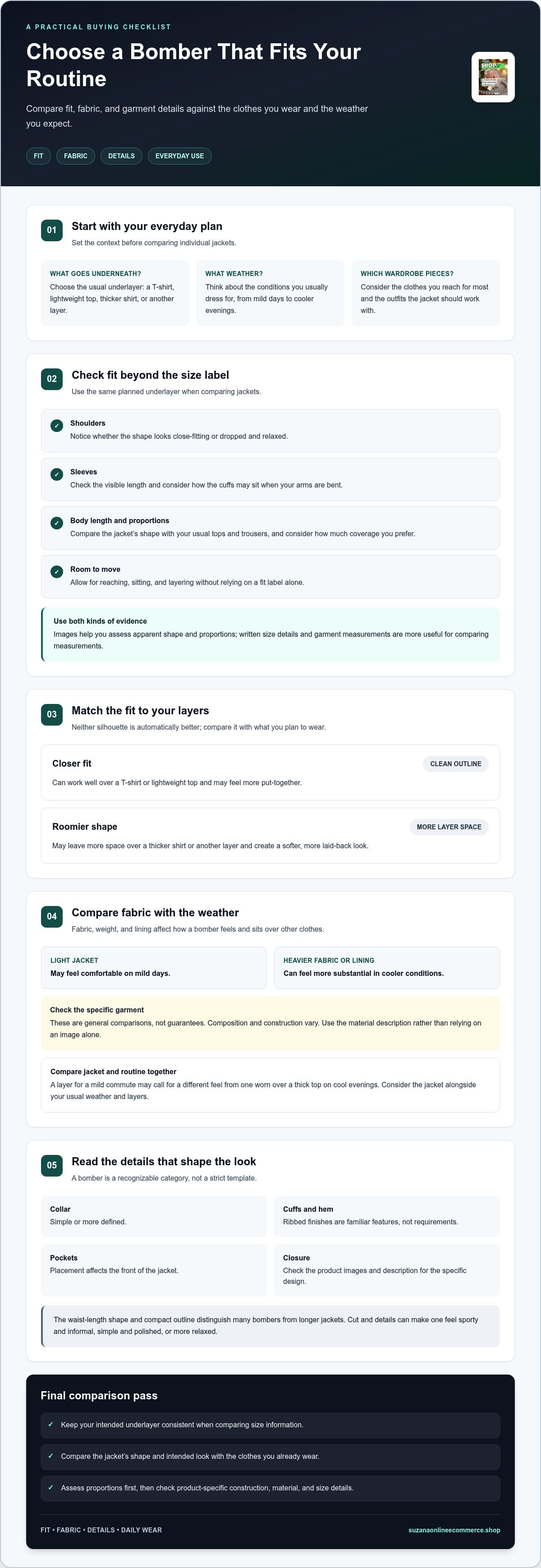
When comparing product pages, use the same criteria for each jacket. Separate details stated in the listing from impressions you draw from a photo. If the listing doesn’t provide a particular detail, don’t treat it as a confirmed feature.
Compare product listings with confidence
Work through the same steps for each jacket. If you’re comparing several options, save favourites to your wishlist and revisit the listings side by side instead of relying on memory.
- Intended use: Picture when and where you expect to wear it, such as for everyday errands or as a layer over workday clothes.
- Fit: Review the listed size information and any garment measurements. Consider the tops you’ll wear underneath and whether you prefer a close or roomier shape.
- Fabric: Read the stated composition and any information about weight or lining. Don’t infer warmth or performance from appearance alone.
- Design details: Look for listed information about features such as the collar, cuffs, hem, pockets, and closure. Compare the description with the product photographs.
- Care: Read the care guidance before deciding whether the garment suits your regular routine. Avoid assuming care needs from a broad fabric category.
- Size information: Use the product’s own sizing details to compare options. Don’t assume the same size label means the same fit across different garments.
Photographs help you assess the overall shape, colour, and visible design. Written descriptions provide details that an image can’t establish. Use both: for example, a photo may suggest a smooth surface, but the fabric composition should come from the listing, not a visual guess. Applying the same standard to each option makes comparisons clearer.
Match the jacket to your wardrobe
A bomber is more likely to earn regular wear if it works with pieces you already reach for. Think about the tops you tend to wear, from simple T-shirts to shirts, and whether the jacket’s shape fits your usual combinations. The essential wardrobe tops checklist can help you take stock of those everyday choices.
Consider your usual pants and the proportions you like together, too. The casual everyday pants guide offers another way to think about comfortable, versatile pairings without turning this buying checklist into a full outfit plan.
After comparing intended use, fit, fabric, details, care, and size information, save promising options to your wishlist. Browse bomber jackets and use the product details to narrow your choices.
Find Your Casual Bomber Jacket and Shop With Ease
A good choice starts with your routine, not a trend. Decide where you expect to wear the jacket, consider the fit you prefer, compare its fabric and weight with your usual weather, then review the product details. This order keeps your search focused on what you’ll actually wear.
From shortlist to final choice
Revisit your shortlisted options against your priorities. Does the shape work with your everyday clothes? Does the stated fabric suit your climate and planned layers? Compare the garment’s size information, visible design details, and care guidance before deciding. Keep stated product details separate from assumptions based on an image, especially for composition, lining, and fit.
If two jackets appeal for different reasons, weigh the trade-offs. One may better match your preferred silhouette, while another may suit the season or layers you have in mind. Return to your intended use as the deciding point. A jacket that fits your routine is more likely to feel like a natural part of your wardrobe.
Browse bomber jackets online
With your criteria in mind, browse the bomber selection and open listings that catch your eye. Product descriptions and photographs can help you compare options. Save favourites to your wishlist so you can revisit their shape, fabric, and care information without relying on memory.
When you’ve chosen an option, add it to your cart and continue through checkout. Before completing your purchase, review the product information once more and make sure it suits your intended use, preferred fit, fabric priorities, and care routine. The aim isn’t to find a jacket for every occasion. It’s to make a clear, comfortable choice for the way you dress day to day.
Keep your comparison simple: intended use first, fit next, fabric after that, then the listing details. This sequence turns a broad search for casual bomber jackets into a manageable decision and helps you avoid relying on assumptions about a specific garment.
Ready to put your checklist to work? Browse bomber jackets and compare the options at your own pace.
Make Room for a Layer You’ll Reach For
Before choosing an everyday jacket, notice which outfits you already wear on repeat. A useful layer should fit into that routine rather than require a whole new wardrobe around it. This can make browsing less about chasing a look and more about finding a piece that works with clothes you own.
Browse casual bomber jackets online, save options to your wishlist, and revisit your favourites when you’re ready. The cart and checkout let you complete your purchase once you’ve chosen a jacket for your wardrobe.
Browse casual bomber jackets and compare the options. Use the fit, fabric, and care details in each listing to choose a layer that suits your everyday outfits.
Frequently Asked Questions
Can you wear a casual bomber jacket to work?
Yes, a casual bomber jacket can work in some workplaces, depending on the dress expectations and the jacket’s appearance. In a relaxed office, a simple design over a neat shirt and tailored-looking pants may feel appropriate. A formal dress code may call for more traditional workwear. Consider how people typically dress in your workplace and whether the jacket feels polished enough for meetings or client-facing moments.
Is a bomber jacket the same as a varsity jacket?
No. The terms describe different jacket styles, though both can give an outfit a casual, sporty feel. A traditional varsity jacket is often associated with contrasting sleeves, striped ribbed trims, or letter patches. A bomber is generally recognized by its compact, waist-length outline. These are common visual cues, not rules for every garment, so use the product description and images to understand the jacket’s details.
Can a casual bomber jacket be worn over a dress?
Yes, a casual bomber jacket can be worn over a dress to create a relaxed contrast with a softer or dressier piece. The proportions affect the look: a shorter jacket leaves more of the dress visible, while a roomier shape can create a more casual outline. Consider the dress’s length and volume, and make sure the combination feels comfortable when sitting and moving.
How should you wash a bomber jacket?
Follow the care label and product-specific instructions, since the right method depends on the jacket’s fabric, lining, and construction. Don’t assume that every bomber can go in a washing machine, even if its surface looks like a familiar fabric. Some materials need gentler handling or specific care. Review the garment’s instructions before cleaning and follow any separate guidance for stains or storage.
Are bomber jackets suitable for petite frames?
Yes, people of any height can consider bomber jackets, though proportions may affect which fit feels comfortable. A shorter body length may feel different from a longer one, and sleeve length can change the overall balance. Review garment measurements when provided, and consider how the jacket will sit with your usual clothes. Personal comfort matters most, so choose proportions you enjoy wearing.
Can you wear a bomber jacket in warmer weather?
Yes, it can be comfortable in warmer weather if the fabric weight, lining, local conditions, and rest of your outfit suit the day. A lighter construction may feel less substantial than a heavier one, but fabric names alone don’t establish how a particular jacket will wear. Use the product listing for its composition and details, and consider whether you’ll wear it over a light top or another layer.


